
Full Faith and Credit
Why State Power, Not Markets, Determines the Fate of Money

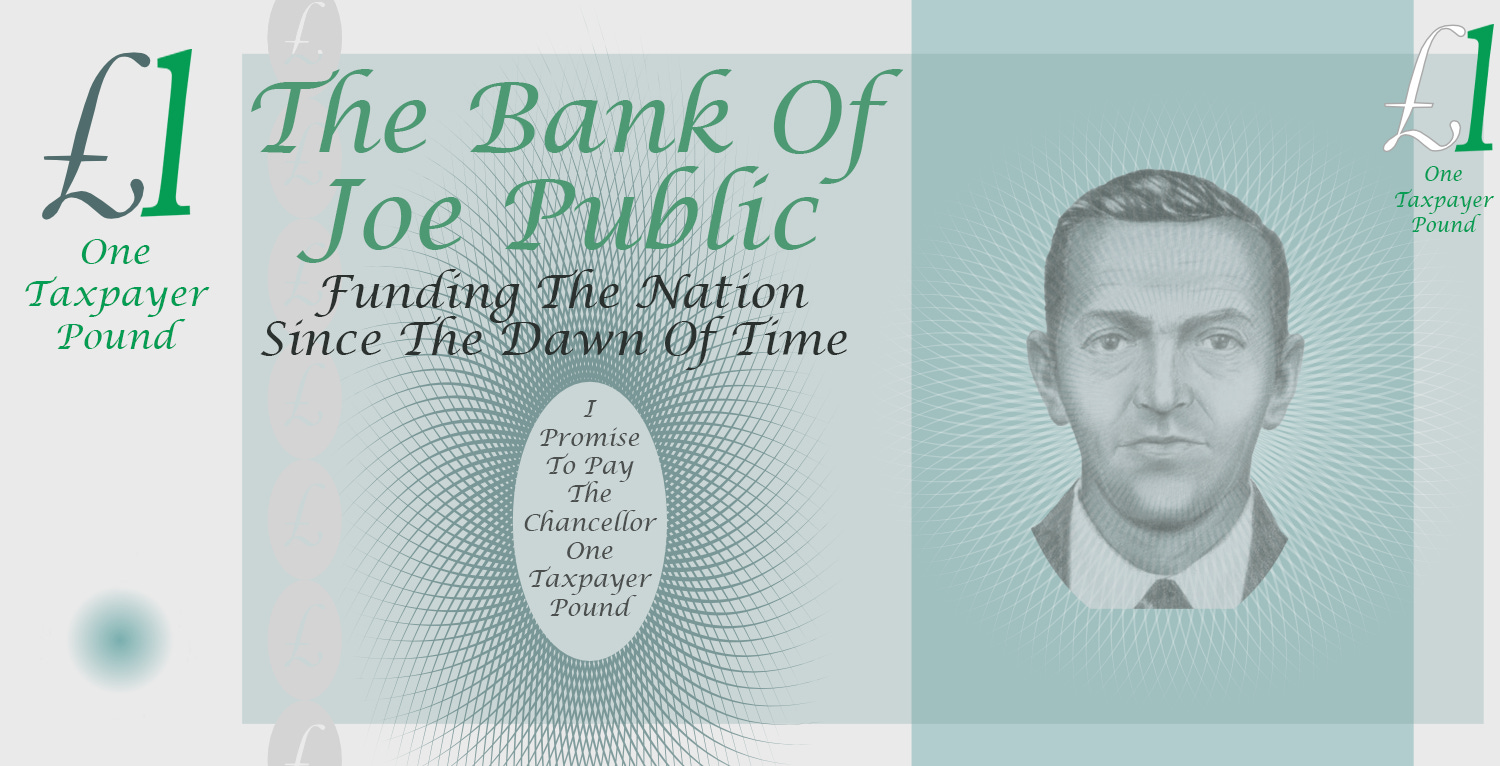
A prince, who should enact that a certain proportion of his taxes should be paid in a paper money of a certain kind, might thereby give a certain value to this paper money; even though the term of its final discharge and redemption should depend altogether on the will of the prince.
Adam Smith, An Inquiry into the Nature and Causes of the Wealth of Nations
The architecture of modern money is built upon a foundational intellectual schism. On one side, the orthodox “Metallist” view sees money as a market-born tool for efficiency. On the other, the “Chartalist” or State Theory of Money argues it is a creature of sovereign power. This article synthesizes the Chartalist framework, demonstrating its superior explanatory power through historical and anthropological evidence. It argues that money’s value and domain are inextricably linked to the state’s fiscal authority – a link severed at great peril, as exemplified by the inherent tensions within the Eurozone.
The Divergent Paradigms of Monetary Origin
To strategically assess modern monetary systems – especially fragile constructs like currency unions – one must first reconcile two opposing lineages of thought. The dominant “M-theory” (Mengerian/Metallist) presents money as a private-sector innovation, an organic solution to the inefficiencies of barter. This school, boasting intellectual giants from Aristotle to von Mises, offers formal elegance. Conversely, the “C-theory” (Chartalist) views money as a state-driven instrument of sovereignty, historically championed by a more heterodox group from Knapp to modern Post-Keynesians. While M-theory provides ideological purity, C-theory finds its mandate in the messy record of history and anthropology. Distinguishing between these is not academic; it is essential for diagnosing whether a currency can survive the divorce of monetary and fiscal authority.
The Chartalist Foundation - Money as a Creature of the State
Chartalism presents a more compelling historical framework because it recognizes that money’s primary role as a “means of payment” for social and legal obligations long preceded its use as a general “medium of exchange.” Anthropological evidence points to money-units first arising to quantify and settle non-market social functions:
Wergeld: Standardized compensations for injury or death, designed to prevent blood feuds.
Bride-price and Social Transfers: Ritualized exchanges requiring a common unit of account.
Religious Obligations: Tithes and offerings to temples, the economic hubs of antiquity.
The state solves a critical market problem: the high “identification cost” of precious metals for the non-expert. By minting coinage with an “insignia of sovereignty,” the state transforms a high-cost commodity into a low-cost, trusted monetary instrument. The falsification of this view is stark: when state authority recedes, monetary systems often collapse. The cessation of government mintage in 10th-century Japan, for instance, led to a centuries-long regression to barter, suggesting money is not a self-sustaining market equilibrium but a manifestation of institutional power.
The Sovereign Nexus - Minting, Seigniorage, and Law
The history of sound money is a history of strong, centralized authority. Successful monetary reforms - from Charlemagne to Edward I - coincide with political consolidation. Minting became a state monopoly to address strategic imperatives: securing bullion and mitigating the “time inconsistency” problem. Private mints face perpetual temptation to debase; only a sovereign with a long planning horizon can credibly maintain quality (even if they sometimes fail, as with the Tokugawa Shogunate’s “colour dressing” of coins). The M-theory errs in assuming markets can function independently of governance. The “infrastructure of settled behaviour” – contract enforcement, suppression of violence, legal debt definition – is the prerequisite for money, as evidenced by the monetary fragmentation following the collapse of Rome.
Taxation as the Driver of Monetary Demand
The core strategic insight of Chartalism is the constitutive link between taxation and monetary demand. A state creates demand for its otherwise valueless tokens by decreeing them the sole acceptable payment for tax liabilities. This “Lerner-Memminger” logic – named for the Confederate Secretary who grasped it during the U.S. Civil War – forces the public to acquire state currency, giving it value through fiscal necessity. This engine has been a powerful tool for economic engineering:
Forced Monetization: Colonial powers imposed hut or poll taxes payable only in sovereign currency to push subsistence economies into cash-based systems.
Validation of Fiat: Chartalism finds the shift from metal to paper money “straightforward,” explained by the state’s power to impose tax liabilities, a sufficient condition for value.
Spatial Definition: A currency’s domain is coterminous with the reach of the sovereign’s fiscal authority. The boundary of a money is a political, not an economic, line.
Chartalism vs. the Optimal Currency Area (OCA) Model
A profound empirical regularity falsifies standard OCA theory: the near-perfect one-to-one correspondence between sovereign states and their currencies. OCA theory posits that currency boundaries should be drawn based on economic factors like labour mobility or shock symmetry. Yet history shows political sovereignty is the primary determinant.
Fragmentation: The collapse of the USSR, Czechoslovakia, and Yugoslavia led immediately to monetary fragmentation, irrespective of economic optimality.
Unification: The formations of the USA, Germany, and Italy required immediate monetary unification to cement sovereign intent.
Historical Failures: The Latin and Scandinavian Monetary Unions collapsed under the political strains of WWI, lacking the unifying sovereign to sustain them.
OCA theory views currency domains as a “private sector search process”; Chartalism correctly identifies them as a “political economy process.”
Here is a suggested rewrite of the section on the Euro, incorporating a synthesis of Goodhart’s original Chartalist critique and the institutional evolution highlighted by economists like Dirk Ehnts. This version maintains your analytical framework while accounting for developments since the currency union’s crisis period.
The Eurozone Synthesis
From Sovereign “Divorce” to a Hybrid Equilibrium
The original Chartalist critique of the Eurozone centred on what Charles Goodhart termed an “unprecedented divorce” between monetary and fiscal authority – a design that appeared to defy the historical “one sovereign, one currency” nexus. This structural flaw was brutally exposed during the 2010-2012 sovereign debt crisis. Member states, unable to issue debt in a currency they controlled, were left vulnerable to self-fulfilling runs in bond markets, trapped in a “bad equilibrium” where fear alone could push solvent states toward default.
However, the Eurozone’s subsequent evolution has been defined by a de facto and de jure mending of this divorce, forging a complex hybrid that synthesizes sovereign fiscal initiative with a federalized monetary backstop. This process has unfolded across three critical dimensions:
The ECB as De Facto Sovereign Lender of Last Resort. The theoretical breakthrough, was recognizing that only the central bank could break the vicious circle of the debt crisis by acting as a lender of last resort to sovereign bond markets. The 2012 announcement of the Outright Monetary Transactions (OMT) program marked this pivotal shift. By committing to “unlimited” purchases of sovereign bonds of distressed members, the European Central Bank (ECB) effectively provided the sovereign guarantee that individual member states had relinquished. As Dirk Ehnts argues, this made national government bonds “risk-free” and decoupled a member state’s borrowing costs from destructive market sentiment, a function intrinsic to a sovereign monetary architecture.
The Suspension and Re-imagination of Fiscal Sovereignty. The crisis-era suspension of the Stability and Growth Pact’s 3% deficit limit and the activation of the EU’s general escape clause were temporary acknowledgments of fiscal reality. More profoundly, the post-crisis institutionalization of mechanisms like the Fiscal Compact (formally, the Treaty on Stability, Coordination and Governance) sought to re-forge the fiscal-monetary link through stringent, enforceable rules rather than a single sovereign treasury. While this represents a “rules-based” re-integration, it confirms the Chartalist premise that a functioning currency area cannot tolerate fully disjointed fiscal policies. The ongoing debate, as Ehnts notes, centres on whether this will evolve into a permanent relaxation of deficit limits or a new framework like a European Finance Ministry.
The Reassertion of Sovereignty in the Monetary Stack. Chartalist analysis is expanding to consider not just who issues money, but who controls the infrastructure through which it flows. The dominance of non-European card networks and tech giants in digital payments revealed a new vulnerability: a loss of “payment sovereignty”. The strategic push for a European payments initiative (e.g., the Wero platform) is a direct effort to align the infrastructure layer with the sovereign monetary layer. This complements the potential digital euro project, creating a sovereign monetary system from the unit of account down through the payment rail.
A Contested but Enduring Synthesis.
The Eurozone is no longer the clean “divorce” of its early design. It has become a contested political construct where:
Monetary sovereignty has been partially pooled and reactively federalized through the ECB’s crisis tools.
Fiscal sovereignty remains national but is heavily circumscribed by supranational rules and underpinned by the ECB’s backstop.
Strategic sovereignty is being actively pursued in the digital monetary infrastructure.
From a Chartalist perspective, the Euro endures not as a refutation of the state theory of money, but as a novel, hybrid proof of it. Its survival has necessitated the gradual, often reluctant, reconstruction of key sovereign functions – a lender of last resort, binding fiscal rules, and sovereign payment systems – at the transnational level. The persistent tensions, from debates over Eurobonds to the technical design of a digital euro, are the ongoing negotiations of this unfinished synthesis. The “sovereign’s right” has not vanished; it has been fragmented, re-bargained, and partially reconstituted in a new, uniquely European form.
The Persistence of the Chartalist Reality
For policy analysts navigating global finance, the Chartalist framework offers superior predictive and explanatory power. It grounds money in the political and historical reality from which it springs. Market-led models, while seductively elegant, fail to explain why currency boundaries align with nations, not economic zones, or why economies revert to barter when states fail.
The relationship between money and sovereign power remains the dominant reality. Money is not merely a transaction-cost-minimizing tool; it is a keystone in the sovereign infrastructure of law, authority, and taxation. To ignore this is to misunderstand the fundamental nature of monetary value. The future of currency unions and global finance must be analysed through this lens, for when the sovereign link is severed, the foundation of value itself is placed in jeopardy.