
Through a Glass, Darkly
Treasury View and the Optics of Off-Balance-Sheet Finance

An (info) Graphic Novella
Introduction
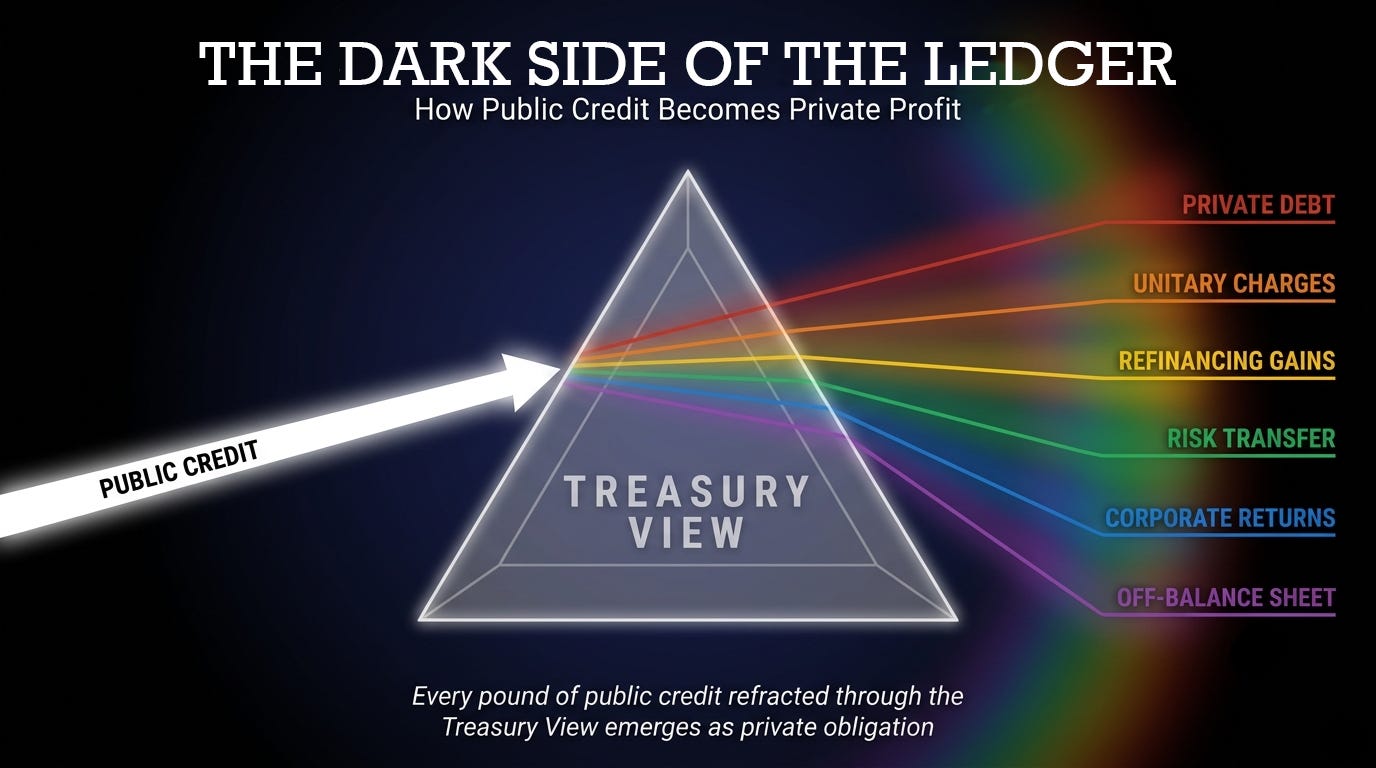
The Private Finance Initiative (PFI) operates as a procurement mechanism for constructing schools and hospitals without immediate government borrowing. This mechanism represents a process in which fiscal constraints, ideological commitments, and corporate interests mutually reinforced one another. PFI codifies a specific response to the fiscal constraint problem faced by governments seeking infrastructure investment while maintaining balanced budgets. The central observation is that the Treasury’s fiscal rules are not genuine economic constraints but self-imposed political limits. As a sovereign currency issuer, the United Kingdom government cannot run out of money in its own currency; PFI substituted cheap public credit for expensive private debt.
The Fiscal Constraint Problem
The British Treasury’s commitment to fiscal discipline, low public debt, and balanced budgets predates PFI by decades, with roots in classical liberal economics reinforced by the 1970s International Monetary Fund crisis (HM Treasury, 1995). This orthodox framework created a fundamental tension: governments desired public infrastructure investment but faced self-imposed constraints on borrowing. PFI emerged in 1992 under John Major’s Conservative government as a workaround to this tension (National Audit Office, 2018). The classification of PFI debt as private rather than public liability enabled infrastructure investment without immediate breach of the Treasury’s fiscal rules.
The accounting effect was substantial. Analysis from the National Audit Office demonstrated that if all operational PFI projects had been publicly financed, the UK’s debt-to-GDP ratio would have been higher.
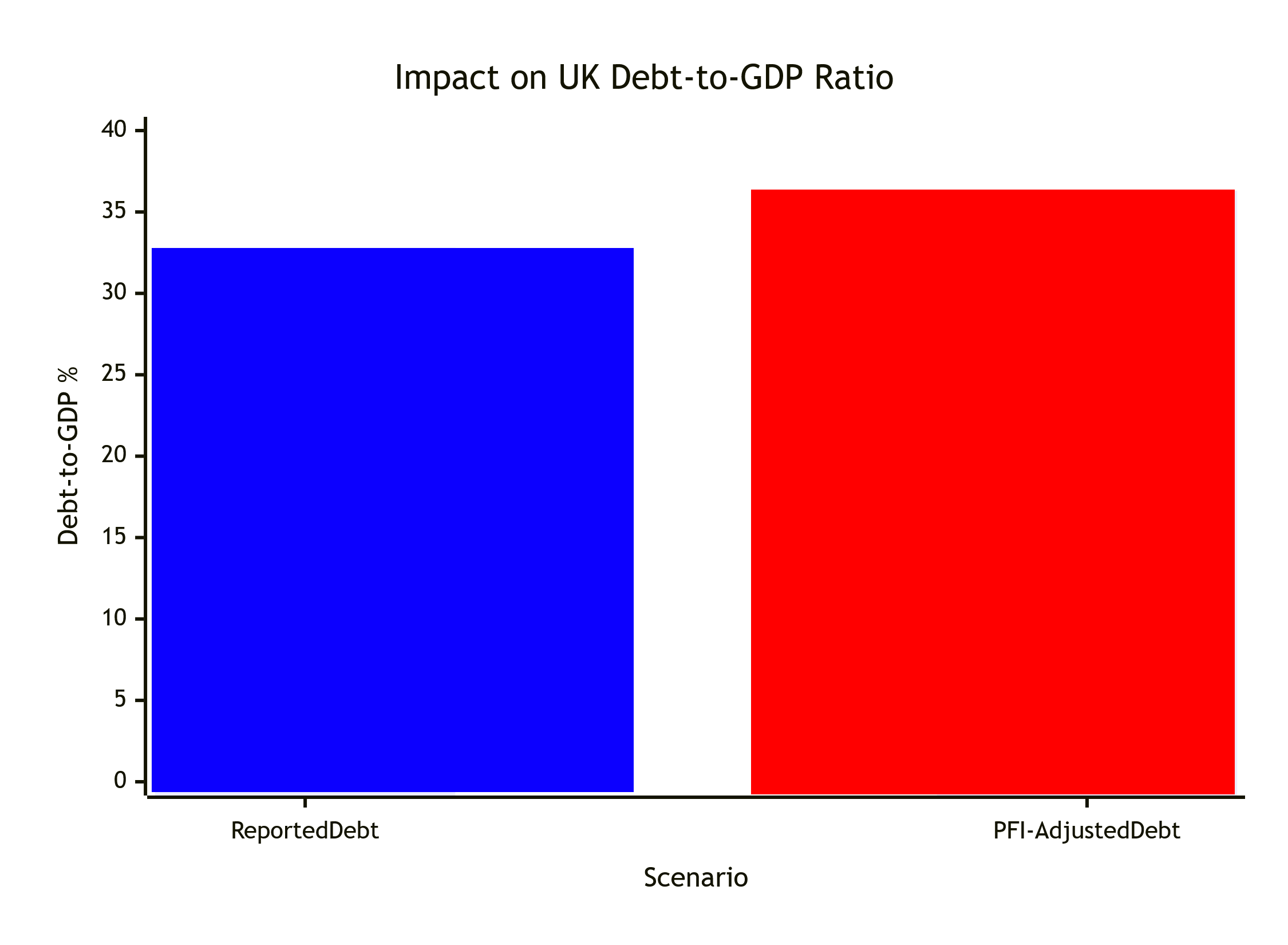
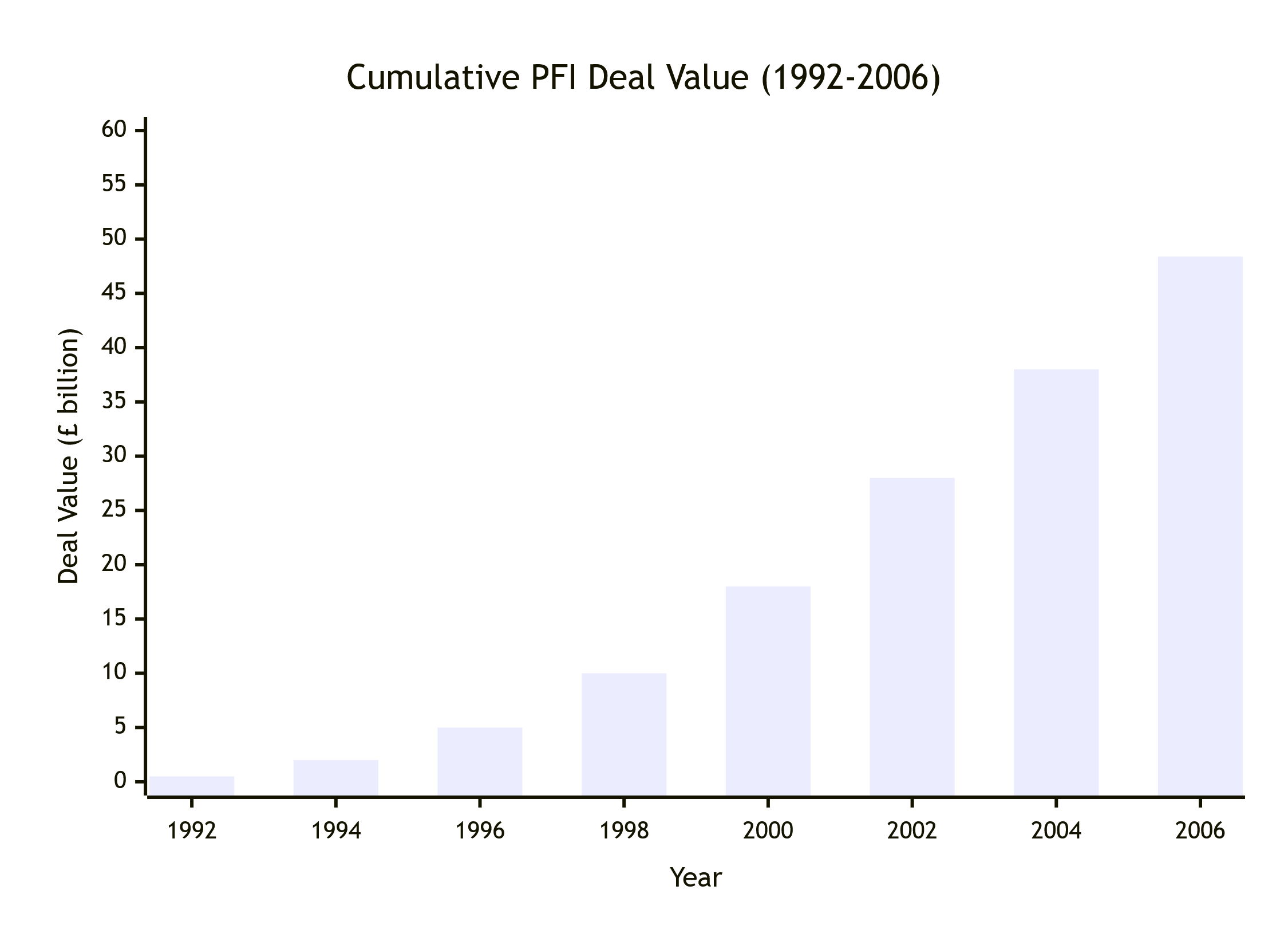
The National Audit Office (2018) observed that by 2006, with £48.4 billion in signed PFI deals, adding even a fraction back to the national debt threatened the government’s fiscal credibility.
This institutional incentive favoured PFI irrespective of its long-term value for money. The fiscal constraint that drove PFI was a political choice, not an economic necessity. Modern Monetary Theory (MMT) clarifies that government spending is not revenue-constrained; the Treasury’s self-imposed borrowing limit created the demand for off-balance-sheet finance.
The Mechanics of the Scheme
The PFI model employed a specific financial structure that locked the public sector into long-term, inflexible payment obligations. The Special Purpose Vehicle (SPV), a shell company formed by a private consortium specifically for each project, raised typically 85 to 95 per cent of funds via senior debt,
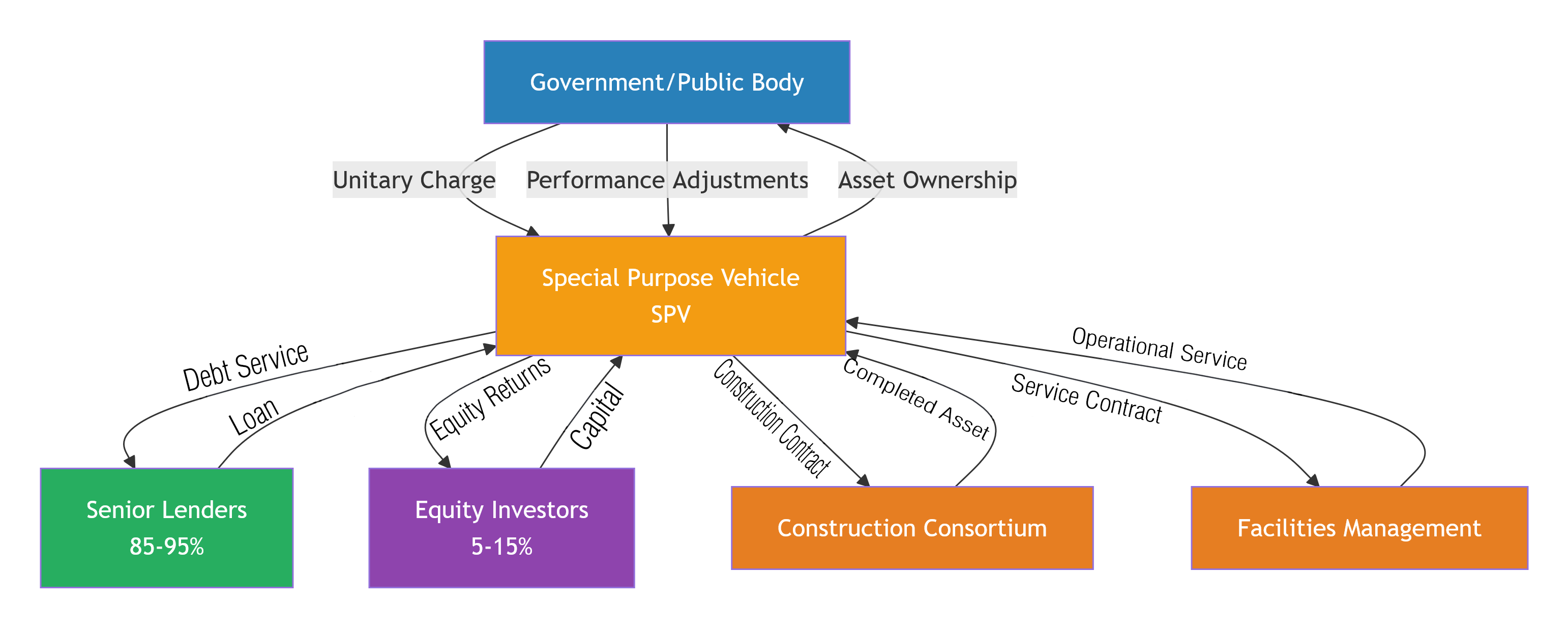
a highly leveraged structure considered safe only because of the implicit public sector backing (National Audit Office, 2018). The public body paid a single, regular unitary charge to the SPV covering capital and service costs over a 25-to-30-year contract period (National Audit Office, 2018).
The payment mechanism tied to performance standards via output specifications, for example requiring a hospital to be 98 per cent available, with the SPV bearing cost overrun risk and the public sector able to deduct payments for underperformance (Hutton, 2002).
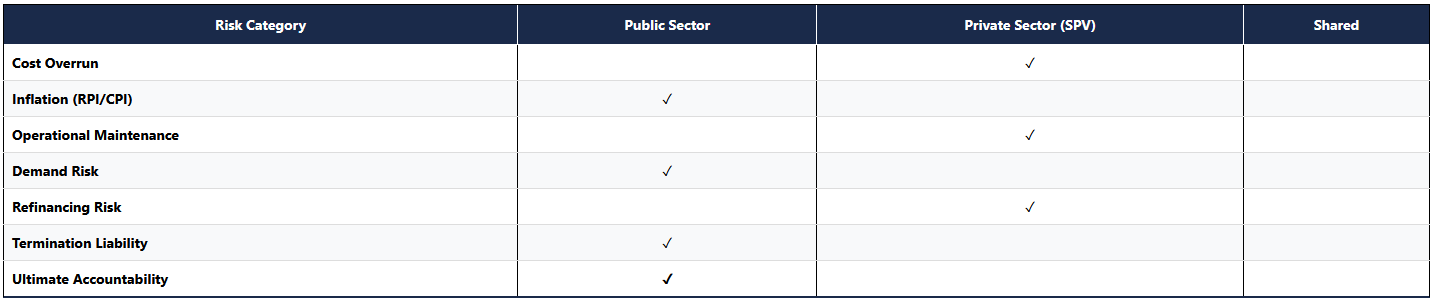
The unitary charge was typically indexed to inflation (RPI/CPI), meaning the public sector bore inflation risk while the SPV bore cost escalation risk between market tests (National Audit Office, 2018).
The termination provisions created a long-term trap. If the public body chose to terminate early, compensation was typically astronomical, placing the SPV in the position as if the full contract had run, plus paying off all senior debt (National Audit Office, 2018).
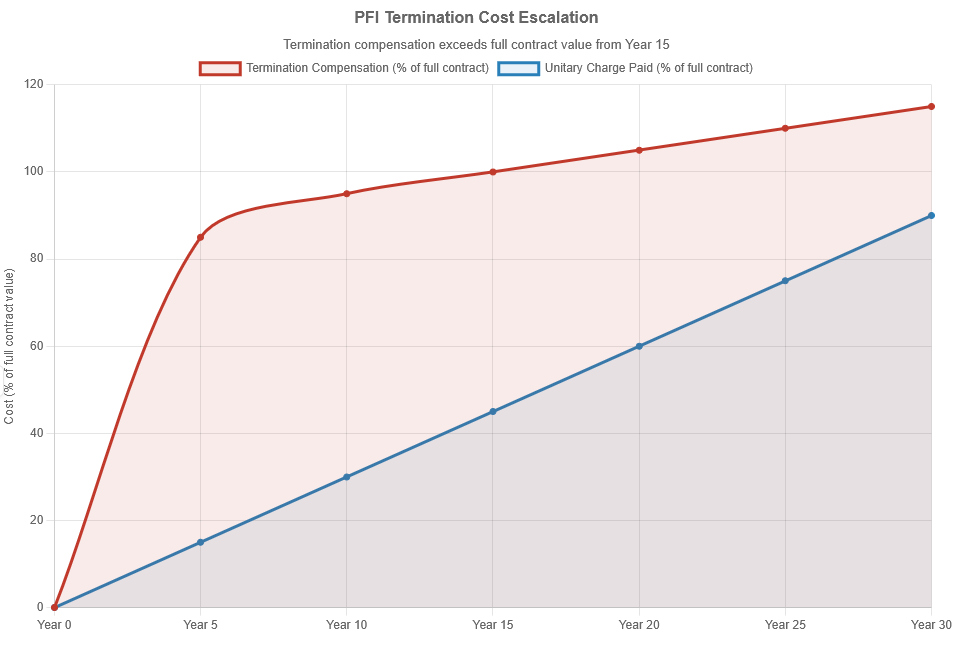
This created a mutual hostage situation: once the PFI pipeline grew, cancelling contracts incurred massive penalties.
Historical Precedents
The structural parallels between PFI and the MEFO bill system of Nazi Germany are striking.
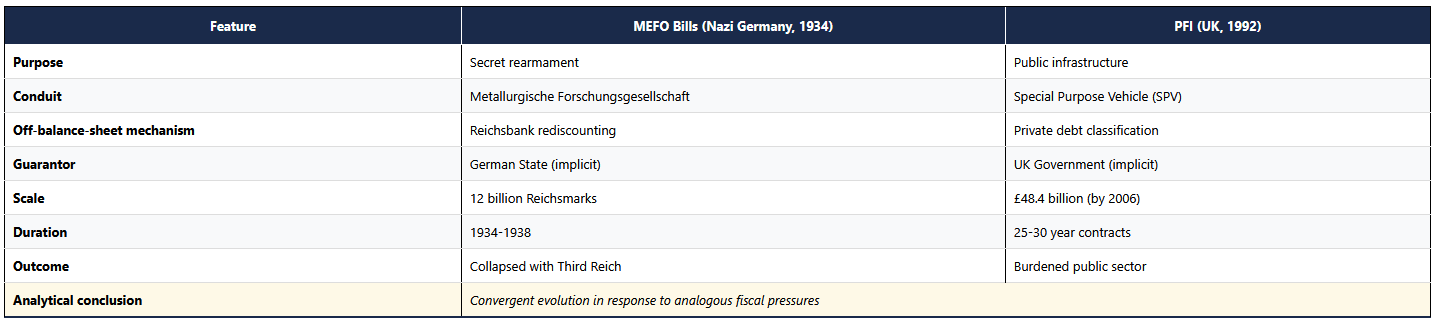
The MEFO system, devised by Hjalmar Schacht in 1934, used a dummy company, Metallurgische Forschungsgesellschaft, to issue promissory notes to arms contractors, with the state guaranteeing them and the Reichsbank secretly rediscounting them (Tooze, 2006). This hid 12 billion Reichsmarks of rearmament spending from budgets until 1938, effectively masking rearmament illegal under the Treaty of Versailles (Tooze, 2006).


The parallels are unmistakable: both schemes used private entities as conduits to issue debt, hid sovereign-backed liabilities from official balance sheets, shifted costs to the future, and proved ultimately unsustainable. The MEFO system collapsed with the Third Reich in 1945, while PFI burdened the public sector with inflexible, multi-decade repayment commitments (National Audit Office, 2018; Tooze, 2006). This parallel is an analytical observation; it is not a historical claim advanced by Tooze.
The evidence for direct lineage is non-existent. Official Treasury documents on PFI do not reference the MEFO system or Schacht (HM Treasury, 1995). The objectives were entirely different: MEFO designed for secret rearmament, PFI for public infrastructure. The Bank of England’s documented historical entanglements with Nazi Germany, notably through the Bank for International Settlements which handled gold looted by the Nazis (Hall, 2021), concern gold laundering and wartime cooperation, not a PFI prototype.
The structural similarities appear to reflect parallel evolution in response to analogous fiscal pressures rather than direct historical inheritance. Both schemes emerged when governments faced constraints on formal borrowing but possessed institutional capacity to create shadow financial systems. This pattern recurs throughout modern financial history (Engelen et al., 2011).
The Ideological Vehicle
If fiscal constraint provided necessity for PFI, the Third Way provided its ideological justification. The Third Way, as articulated by Anthony Giddens and adopted by Tony Blair’s New Labour, rejected old-style nationalisation and Thatcherite laissez-faire, arguing instead that the state should enable rather than provide, using private sector dynamism to achieve public goals (Giddens, 1998).
PFI was adapted to this ideological frame. It kept hospitals and schools publicly owned, satisfying Labour values, but had them built and financed by private capital, satisfying business interests. The official justification emphasised risk transfer: private sector efficiency and risk-taking would deliver better value. In practice, however, the real transfer was financial risk (cost overruns) and operational risk (maintenance), while the public sector retained demand risk. If a hospital was underused, the state still paid (National Audit Office, 2018).
The PFI boom under Blair gave substantial credence to Margaret Thatcher’s observation that Blair was her greatest achievement, a statement she made at a dinner in 2002, as recorded in contemporary accounts (Thatcher, 2002). By transforming Labour into New Labour, Blair accepted the broad free-market consensus Thatcher had built. New Labour used private finance enthusiastically, not as a concession, but as a core part of its Third Way philosophy of partnering with business (Giddens, 1998).
The Corporate Capture Thesis
Critics have argued that PFI represented a form of corporate capture, a deliberate scheme by financial institutions to extract long-term public revenue streams (Meek, 2014). The evidence supports a more nuanced interpretation: corporations did not create the Treasury View, but they rapidly learned to exploit its contradictions.
The opportunity lay in the asymmetry between government and corporate capabilities. Firms had vastly more expertise in complex financial structuring than fragmented government departments. They used this to negotiate favourable terms, lengthy contracts, high refinancing gains, and termination provisions making early cancellation prohibitively expensive, that the Treasury only later understood (National Audit Office, 2018). As PFI became established, banks and construction firms formed powerful industry bodies, such as the PPP Forum that lobbied to expand and entrench the model, framing themselves as partners rather than profiteers (Meek, 2014).
The scale of corporate benefit was substantial. PFI offered long-term, government-guaranteed revenue streams ideal for securitisation and pension funds.
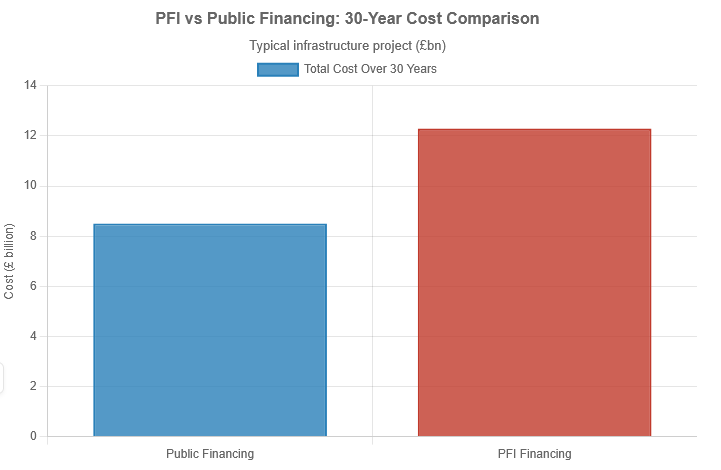
Banks earned fees on arranging deals, and investors obtained steady yields, turning public infrastructure into a tradable asset class (Engelen et al., 2011). Taxpayer value was further undermined by poor transparency, with many investors registering offshore and Freedom of Information laws not applying to PFI providers (Meek, 2014).
The Moral Hazard Problem
PFI created what economists term a moral hazard, a situation where profits were privatised to shareholders while risks were socialised to taxpayers via the unitary charge, and control was fragmented as the public sector could not easily alter services (Meek, 2014). This structure was inherent to the PFI model’s design.
The Third Way ideology that legitimated PFI contained a fatal flaw: it accepted market mechanisms as the primary delivery vehicle for public goods while retaining political accountability for their outcomes. When PFI projects underperformed or proved poor value for money, the public blamed the government, not the private partners who had extracted substantial fees and returns. The government, however, had ceded operational control to those private partners, creating a classic accountability vacuum (National Audit Office, 2018).
Global Diffusion
The UK actively exported the PFI model globally as a core part of its Third Way industrial strategy. Via trade missions and organisations such as the Department for International Development, the government lobbied foreign governments, particularly in developing and Eastern European nations, to adopt the British PFI model (World Bank, 2006). The goal was to create new markets for British firms. By securing adoption of UK-style PPP laws, British legal, financial, and consulting firms positioned themselves to win lucrative advisory and construction contracts (World Bank, 2006).
The strategy had measurable success. By the early 2000s, UK firms were advising on healthcare PFIs in Italy and Chile, school projects in Ireland and Iceland, and major rail links in the Netherlands, with growing interest in Australia, South Africa, and Japan (World Bank, 2006).
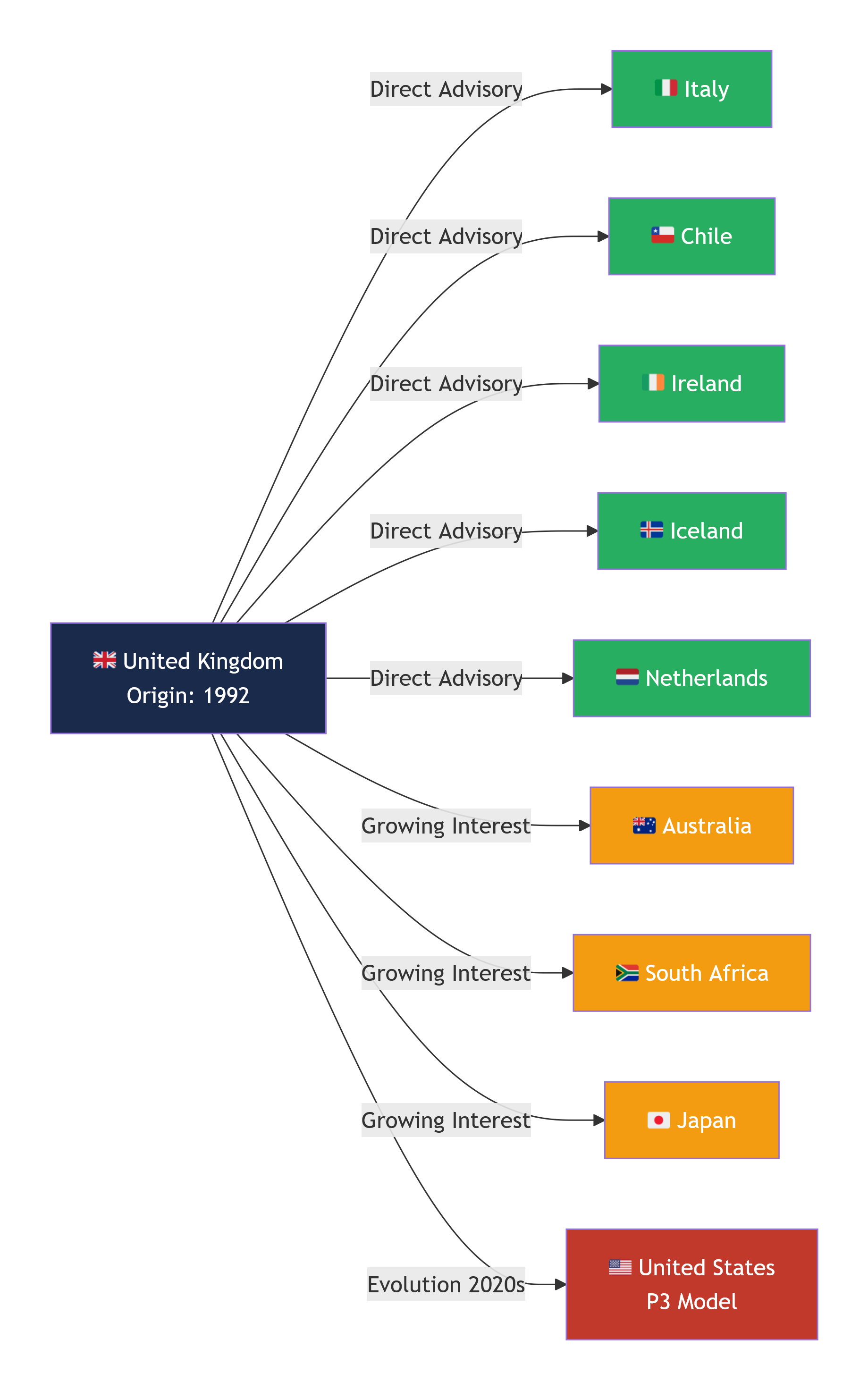
The United States has become the major arena for the model’s evolution, often called P3, public-private partnership. The US faces a substantial infrastructure funding gap. The American Society of Civil Engineers gave US infrastructure a C- grade and estimated a 10-year funding gap of $2.59 trillion (American Society of Civil Engineers, 2021).
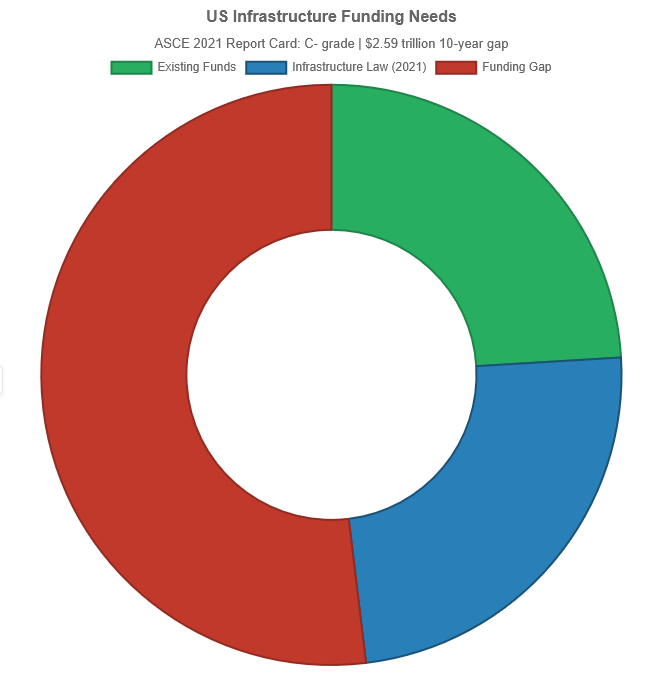
Traditional government funds and the $1.2 trillion bipartisan infrastructure law cover only a fraction of what is needed.
This gap drives US states toward P3s, complex contracts where private partners design, build, finance, operate, and maintain projects. Examples include Georgia’s $11 billion highway project and Maryland’s troubled Purple Line light rail (Bain, 2021). Private credit lenders increasingly finance non-discretionary infrastructure, hospitals, water, transport, due to its stability and low default rates, seen as a safer bet than corporate debt (Bain, 2021).
Unlike the UK, the US lacks standardised national P3 guidelines and suffers from a patchwork of state-level policies, making deals highly localised and often more complex (Bain, 2021). This fragmented regulatory environment creates both opportunities for private capital to shape policy and risks of poorly structured deals.
The German Experience
Gerhard Schröder’s Neue Mitte (New Center) in Germany followed a similar Third Way logic, balancing the SPD’s traditional welfare state with globalised economic realities (Giddens, 1998). Schröder’s Agenda 2010 reforms, especially Hartz IV, made Germany competitive by reducing welfare rights and deregulating labour, including reducing unemployment benefit duration and merging welfare systems (Sachverständigenrat, 2006).
Germany’s experience with PPP/PFI projects was mixed. Massive cost overruns, bankruptcies, and poor planning plagued major P3s such as the Toll Collect project and various school and municipal PPPs (Bain, 2021). Schröder’s Third Way addressed modernising the German welfare state, and his P3s operated as pragmatic financial tools rather than the secret revival of a fascist financial model.
The Role of Think Tanks
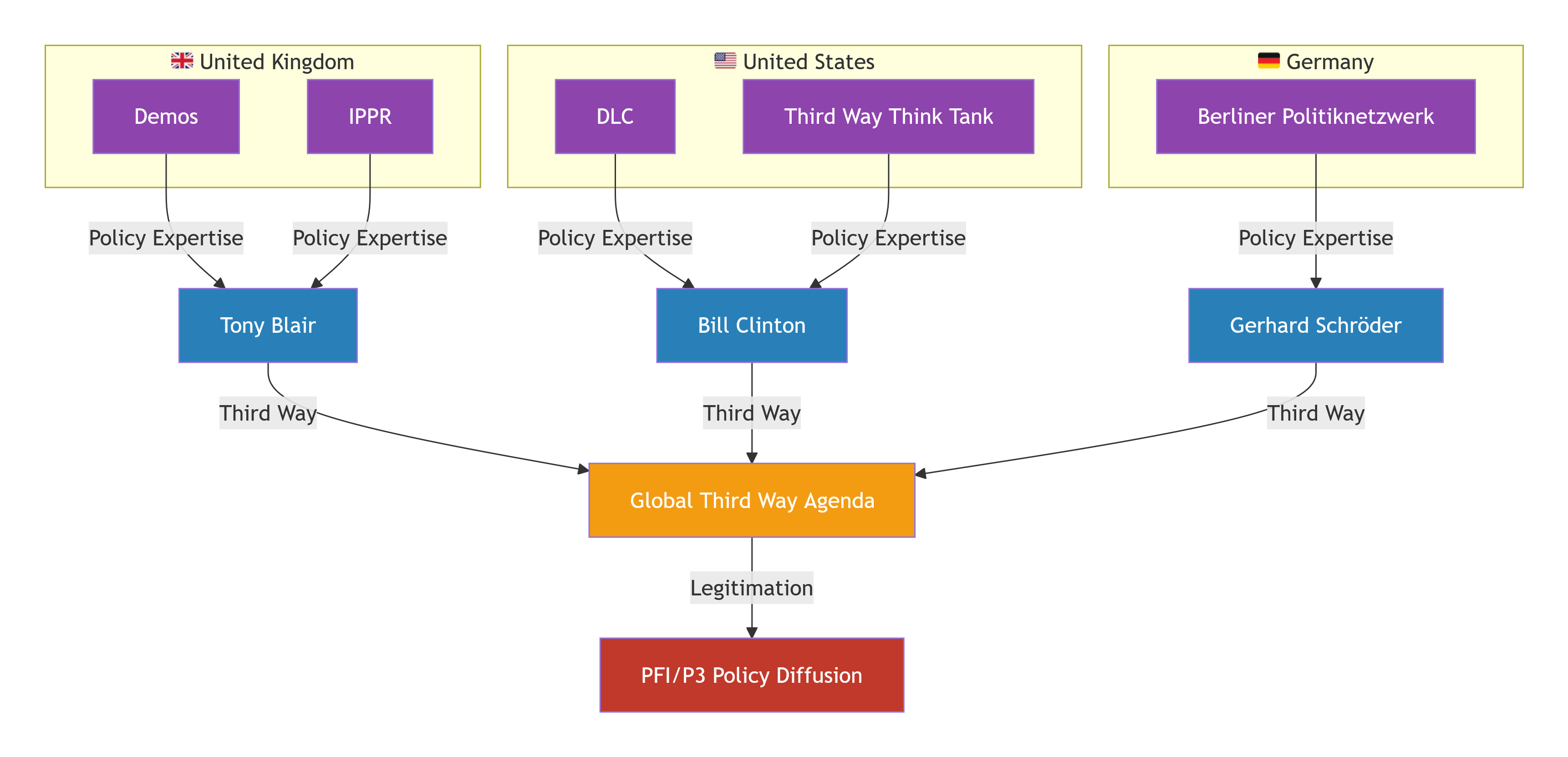
The transformation of centre-left politics across the UK, US, and Germany was driven by organised policy networks.
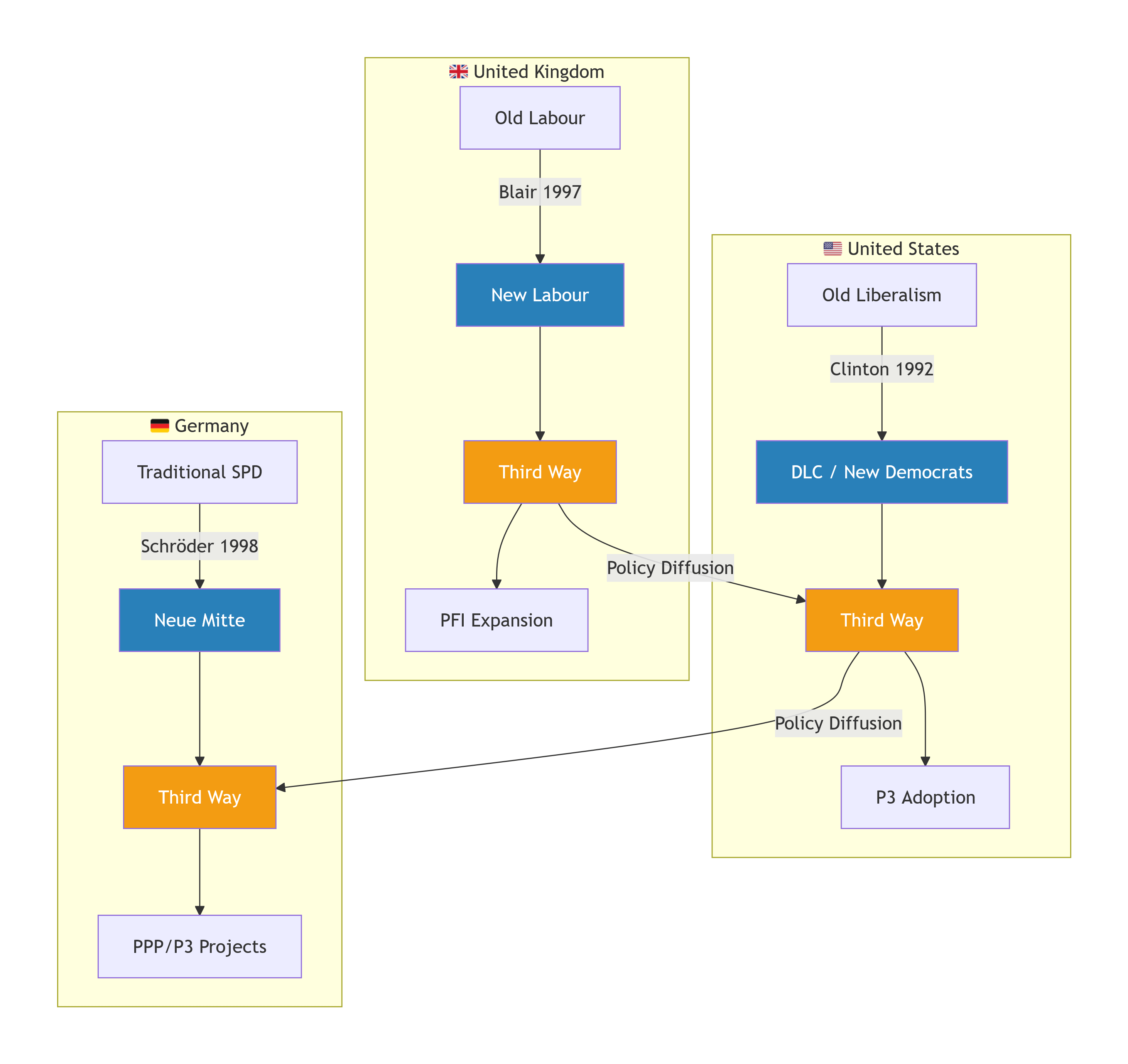
Think tanks served as the interface between political strategy and policy expertise, legitimising the shift away from traditional social democracy and towards the market-friendly Third Way (Giddens, 1998; Meek, 2014).
In the UK, Demos and the Institute for Public Policy Research (IPPR) defined the project for the New Left and Labour in the early 1990s, with their work becoming intertwined with Blair’s ambitions after 1997 (Giddens, 1998). In the US, the Democratic Leadership Council (DLC) was founded as a direct response to Reagan’s 1984 landslide, aiming to break the party’s association with old-line liberalism and the New Deal vocabulary (Giddens, 1998). Groups such as the DLC and the Third Way think tank actively courted corporate funding, positioning themselves against progressive populists (Meek, 2014).
The core similarity across these different national contexts was identical: these think tanks provided the intellectual veneer for what was essentially a neoliberal policy agenda, repackaged with progressive language.
Institutional Coordination
The PFI story is embedded in broader institutional relationships between HM Treasury and the Bank of England. Their coordination framework, governed by formal Memoranda of Understanding, operates around distinct and legally separate responsibilities. The Treasury is the spending department, while the Bank of England is operationally independent for monetary policy (Bank of England, 2025).
When coordination breaks down, the consequences can be severe.
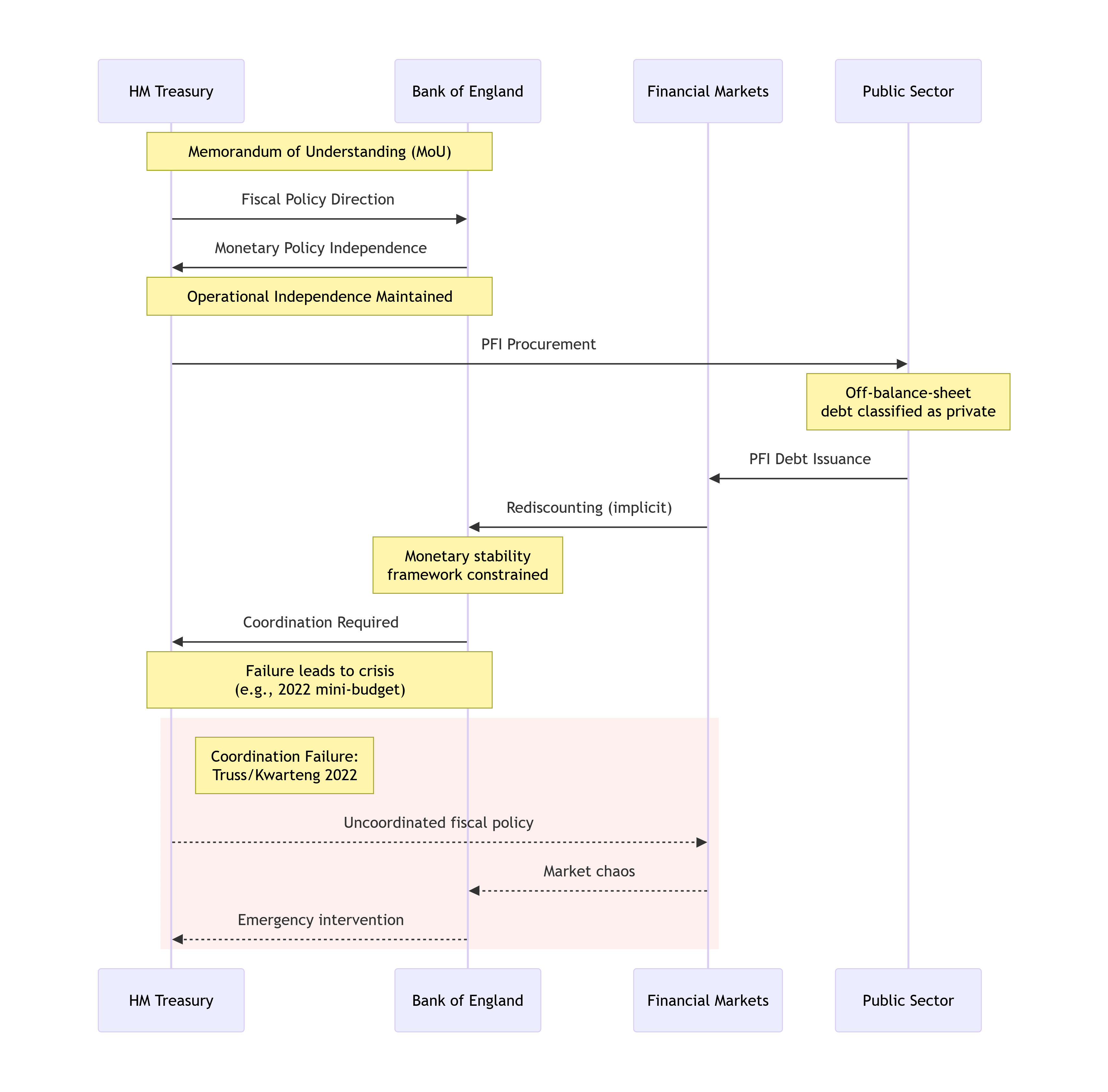
The Truss/Kwarteng mini-budget of September 2022 was a textbook case of failed coordination. The Bank of England deputy governor stated they were not fully briefed on the package, there was no forecast from the Office for Budget Responsibility, and the market chaos that followed demonstrated the danger of not coordinating fiscal and monetary policy (Bank of England, 2025).
This institutional tension between the Treasury’s fiscal priorities and the Bank’s monetary independence creates a structural environment that PFI-type innovations exploit. Governments facing spending demands and fiscal constraints will seek off-balance-sheet solutions regardless of institutional configuration.
Observations
The PFI story reveals a recurring pattern in modern governance. Governments pursuing fiscal discipline create shadow financial systems that private capital subsequently exploits. This pattern transforms public infrastructure into a tradable asset class, generating returns for financial intermediaries while often delivering poor value for taxpayers.
The structural parallels with the MEFO bill system reflect convergent evolution in response to analogous fiscal pressures rather than direct historical inheritance. Both schemes allowed governments to bypass formal borrowing constraints. Both created long-term, off-balance-sheet liabilities. Both proved ultimately unsustainable.
The PFI model has migrated globally, with the United States becoming the primary growth market for its P3 variant. The US infrastructure funding gap provides a powerful driver for states to embrace private finance. This represents a policy diffusion: a mechanism designed for British fiscal constraints in the 1990s has become a template for American infrastructure investment in the 2020s.
From an MMT perspective, the Treasury’s self-imposed fiscal rules created the very problem that PFI purportedly solved. A sovereign currency issuer faces no solvency constraint; the Treasury could have financed infrastructure through public issuance at lower cost. PFI substituted expensive private credit for cheap public credit, transferring public revenue streams to private hands while maintaining the appearance of fiscal discipline. The resultant conclusion is that PFI represents not a necessary response to genuine economic constraints but a political choice to privilege private finance over public provision.
Bibliography
American Society of Civil Engineers (2021) 2021 Report Card for America’s Infrastructure. Reston, VA: ASCE.
Bain, R. (2021) Public-Private Partnerships: Infrastructure Investment and the New Financial Landscape. Washington, DC: World Bank Group.
Bank of England (2025) Memorandum of Understanding between HM Treasury and the Bank of England. London: Bank of England.
Engelen, E., Ertürk, I., Froud, J., Johal, S., Leaver, A., Moran, M., Nilsson, A. and Williams, K. (2011) After the Great Complacence: Financial Crisis and the Politics of Reform. Oxford: Oxford University Press.
Giddens, A. (1998) The Third Way: The Renewal of Social Democracy. Cambridge: Polity Press.
Hall, R. (2021) Banking on Hitler: The Untold Story of the City of London and the Nazis. London: I.B. Tauris.
HM Treasury (1995) Private Finance Initiative: The Government’s Approach. London: HMSO.
Hutton, W. (2002) The State We’re In, revised edition. London: Vintage.
Meek, J. (2014) Private Island: Why Britain Now Belongs to Someone Else. London: Verso.
National Audit Office (2018) PFI and PF2: A Review of the Evidence. London: National Audit Office.
Sachverständigenrat (2006) Jahresgutachten 2006/2007. Wiesbaden: Sachverständigenrat zur Begutachtung der gesamtwirtschaftlichen Entwicklung.
Thatcher, M. (2002) Speech at the Waldorf Hilton Hotel, London, 21 November 2002.
Tooze, A. (2006) The Wages of Destruction: The Making and Breaking of the Nazi Economy. London: Allen Lane.
World Bank (2006) Public-Private Partnership in Infrastructure: Guidelines and Case Studies. Washington, DC: World Bank Group.
What an incredibly depressing tale of private greed and public incompetence, based on the ignorance about the government's sovereign currency issuing powers, which still persists today. The Government should terminate all PFI contracts immediately - the private sector has benefited enough already - and never ever engage again in this crazy transfer of wealth from public to private sector. But obviously they will, because the Government has been captured by private financial interests.
MMTweeTruth
“Why fund public infrastructure with interest-bearing bonds when the Govt can issue interest-free currency backed by the exact same taxpayers?
One serves citizens, the other enriches bankers.”
Henry Ford & Thomas Edison 1921
~100 years later, nothing much has changed
#MMT