
78 Candles
A Birthday Blueprint for Restoring the NHS

A Graphic Novella

How PFI, Asset Stripping, and Workforce Substitution Have Weakened the NHS
The contemporary crisis facing the National Health Service (NHS) is not an unforeseen collapse but the culmination of a deliberate, decades‑long strategy aimed at restructuring and ultimately privatising one of the world’s most admired publicly funded healthcare systems. This process has been multifaceted, involving catastrophic financial mismanagement through instruments like the Private Finance Initiative (PFI), systematic asset stripping via opaque corporate structures, and a contentious shift in the medical workforce composition. These elements, while distinct in their execution, form a coherent whole designed to transfer value from the public purse to private hands, leaving the NHS chronically under‑resourced and operationally compromised. The evidence points not to accidental consequences of austerity but to a sustained ideological campaign that has fundamentally undermined the service’s ability to deliver on its founding principles.
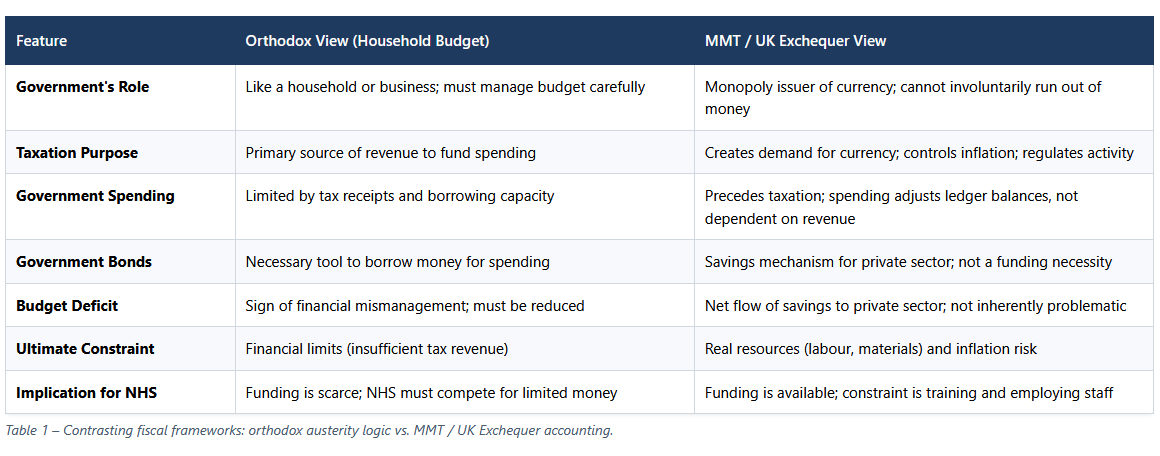
The most prominent and damaging instrument of this strategy has been the Private Finance Initiative. Launched to enable the government to build and maintain public infrastructure without appearing to borrow directly, PFI involved private consortia financing, building, and operating assets for long‑term periods, typically 25 to 30 years (King’s Fund, 2024). For the NHS, this meant new hospitals and facilities being constructed by private companies who then charged the health service a series of unitary charges covering interest, profit, and maintenance.

The stated rationale was to bring in private sector efficiency and provide capital investment without immediate budgetary impact. However, a mountain of evidence reveals this to be a profound economic failure. The Treasury itself admitted that for a typical PFI contract, the public sector would be between £2.2 billion and £4.2 billion worse off over the first 21 years compared to if it had simply retained ownership and financed the project through conventional means (HM Treasury, 2018). A report from Whitehall’s own National Audit Office (NAO) confirmed this finding, stating unequivocally that the government is worse off than if it had financed the projects directly (NAO, 2017). The scale of this financial haemorrhage is staggering; taxpayers face a total bill of nearly £200 billion to pay private contractors for hospital assets over the next quarter‑century alone. By March 2018, 101 NHS trusts were collectively liable for approximately £50 billion in future unitary payments under PFI contracts (Centre for Health and the Public Interest, 2025).

This financial drain has come at the expense of frontline care. Contrary to claims of superior value for money, studies show that PFI hospitals actually spend more on maintenance than non‑PFI hospitals (London School of Economics, 2018). While some NAO reports have concluded that most PFI hospital contracts are well‑managed and achieving expected value, other analyses point to significant underlying problems. The NAO has identified that termination due to poor performance is a potential option for a concerning number of trusts, with one report noting that 16 NHS trusts (15% of all those using PFI) could terminate their contracts due to operator default (London School of Economics, 2018). This indicates that the supposed efficiency gains were often illusory, replaced by contractual complexities and hidden costs that continue to plague the NHS. The legacy of PFI is therefore one of toxic contracts that tie up vast sums of money that could otherwise be spent on clinical staff, equipment, and services (Centre for Health and the Public Interest, 2025). Critics, including the British Medical Association (BMA), have consistently called for action, urging the government to deal with existing PFI liabilities through buyouts or terminations. While the public cost of these remedial actions has already reached £3.755 billion for completed cases, this figure is dwarfed by the total liability and represents a necessary step in reclaiming financial control (UK Parliament, 2021).

Beyond PFI, a broader strategy of asset stripping has been pursued, leveraging special purpose vehicles to create a complex web of debt and dependency. The most glaring example is NHS Property Services Limited (NHSPS). Created to own the NHS estate and lease it back to trusts, NHSPS was intended to be a self‑sustaining entity (NHS Property Services, n.d.). In practice, it has become a colossal administrative and financial failure. Since its establishment six years prior to one NAO report, NHSPS had accumulated losses of £1.01 billion (UK Parliament, 2019). Compounding this, it was owed a massive £576 million in unpaid rent and other charges from its NHS tenants (UK Parliament, 2019). The NAO investigation revealed the fundamental flaw in this structure: NHS Property Services lacks the basic powers of a commercial landlord (UK Parliament, 2019). It cannot enforce lease agreements or effectively collect debts, rendering its entire business model unworkable. This demonstrates a classic case of creating a quasi‑commercial entity to manage public assets without granting it the necessary legal authority, leading to massive inefficiency and financial leakage. The sheer scale of the problem is highlighted by the fact that the NHS estate contains properties that are no longer needed, which could be reclaimed through a vacant space handback scheme to free up funds for patient care (NHS Property Services, n.d.). The existence of such a bloated, loss‑making entity managing the NHS’s physical assets is a testament to a systemic failure to align commercial structures with public health objectives (UK Parliament, 2019).

More recently, this strategy of undermining the NHS has manifested in the controversial expansion of the Physician Associate (PA) role. Proponents argue that PAs are essential to alleviate doctor workload and tackle the immense waiting lists, with one source suggesting they are a critical part of the drive to reduce the backlog of 6.61 million patients in England. However, there is mounting evidence and concern that this expansion is being used as a mechanism to substitute less qualified, and significantly cheaper, staff for fully trained doctors. This trend is deeply contentious. Multiple reviews and expert opinions conclude there is little convincing evidence supporting the safety and efficacy of PAs and Anaesthetic Associates (AAs) in the UK context. Research has found no convincing evidence that PAs add value in UK primary care or that AAs are safe substitutes for doctors. The BMA has raised explicit concerns about this substitution, highlighting cases where PAs have been used as direct substitutes for doctors, a practice described as clearly risky and confusing for patients. A government‑commissioned review concluded that PAs should be banned from diagnosing patients who have not been previously triaged by a doctor, underscoring the inherent risks of blurring professional roles. This controversy coincides with a crisis in traditional medical training, with reports of newly qualified GPs struggling to find jobs even as PA training places are increased. This suggests a cynical strategy to devalue decades of rigorous medical training in favour of a more flexible, lower‑cost workforce model, potentially at the expense of patient safety and the professional standing of doctors. The cumulative effect of these interconnected strategies—PFI, asset stripping, and workforce substitution—is a health service whose financial resources have been systematically drained, whose physical assets poorly managed, and whose clinical standards potentially compromised, paving the way for a deeper crisis of capability and public trust.
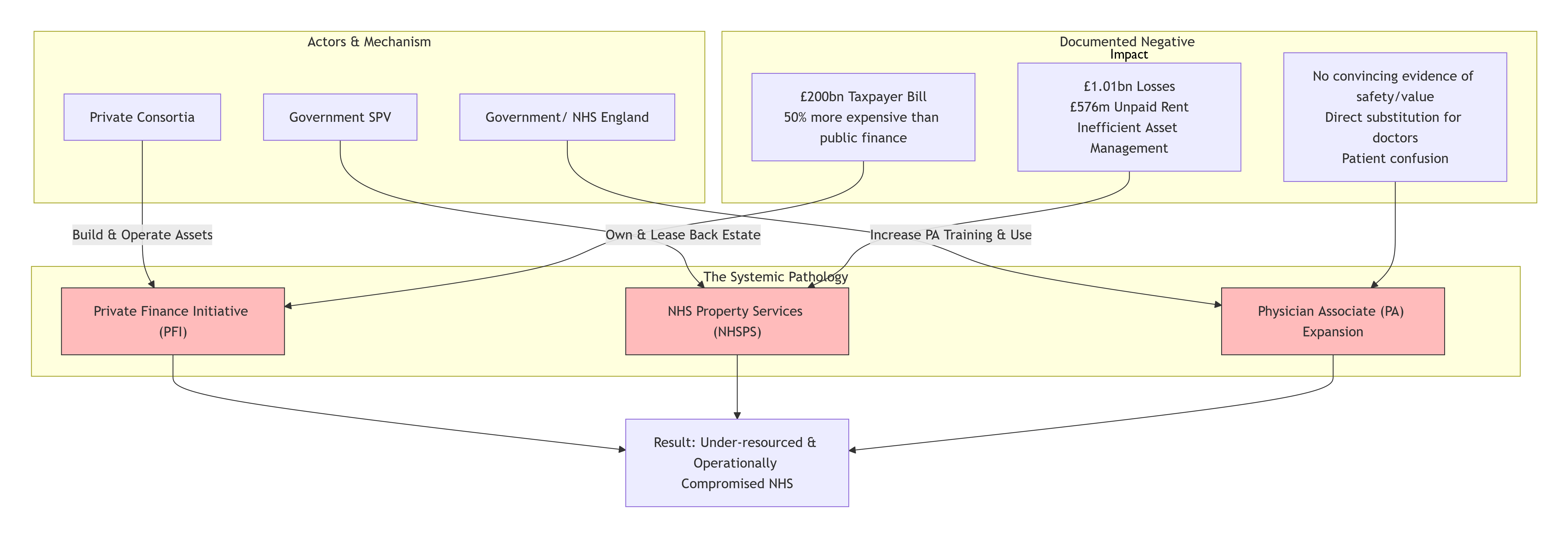
The Crisis of Confidence and Capacity
Record Dissatisfaction and Exhausted Staff
The cumulative weight of systemic failures—from crippling PFI debt to fragmented outsourcing and contested workforce models—has precipitated a severe dual crisis within the NHS: a catastrophic erosion of public trust and the widespread exhaustion of its dedicated workforce. These two phenomena are inextricably linked; as the service falters under the strain of underfunding and poor management, public confidence plummets, and the professionals responsible for delivering care are left to navigate impossible workloads within deteriorating conditions. Historical data provides a stark benchmark against which to measure this decline, revealing a system far from its former status as a world‑leading institution.
Public satisfaction serves as a crucial barometer of the NHS’s social contract with the nation. For decades, the service enjoyed near‑universal admiration, a sentiment captured in the annual British Social Attitudes (BSA) survey, which has polled the public’s views since 1983 (NatCen, n.d.). During the era of the NHS Plan in 2004, investment and reform led to a service that was described as truly responsive and of high quality, with patient satisfaction higher than ever before. However, a steady downward trend has seen this trust unravel. By 2010, satisfaction had fallen from a peak of 70%70% to 58%58%. More recent data paints an even bleaker picture. According to the 2024 BSA results, just one in five people (20%)(20%) said they were satisfied with the way the NHS runs, a figure that rose slightly to 21%21% in 2024 before a modest recovery to 26%26% in 2025 (King’s Fund, 2026). This represents the highest level of dissatisfaction ever recorded in the history of the survey (Healthwatch, 2025). The public is acutely aware of the service’s struggles, with 46%46% identifying issues like staff shortages and access as primary drivers of dissatisfaction (NatCen, 2023). Despite this clear demand for improvement, pessimism about the future is rife; only 16%16% of respondents expect the quality of care to improve in the next five years, while 53%53% anticipate it will get worse (BBC News, 2026).
This crisis of confidence is mirrored in the lived experience of NHS staff, who are the backbone of the organisation. They are confronting a perfect storm of chronic underfunding, crumbling infrastructure, and unsustainable workloads. There is a documented shortage of doctors, nurses, and other skilled staff across the health service. This is reflected in international comparisons, which show the UK has fewer doctors per capita than many other developed nations. The strain on the existing workforce is immense. Resident doctors have taken to the picket lines, demanding fair pay restoration and warning that without it, the NHS will face a huge shortage of NHS doctors. Psychiatrists working in facilities built in 1972 report significant burnout due to outdated infrastructure and growing demands. The dedication of these professionals is repeatedly cited as the reason the service continues to function at all, yet they do so under crushing pressure. One trust reported its maintenance backlog now stands at over half a billion pounds, a direct consequence of years of deferred investment (UK Parliament, 2026). This neglect of the physical estate compounds the stress on staff, who must deliver care in environments that are increasingly unsafe and inefficient. The situation is so dire that exhausted professionals are speaking out, highlighting the human cost of a system pushed beyond its limits.
The interplay between these two crises—the public’s disillusionment and the staff’s burnout—is what makes the current situation so perilous. As waiting lists grow to record highs—and the 18‑week target remains unmet for years—public anger naturally mounts. This public dissatisfaction translates into political pressure, which in turn leads to further short‑termist interventions and budget cuts, placing even greater strain on the workforce. The cycle is vicious: underinvestment leads to poor performance, which erodes public trust, which forces further constraints on the very people trying to fix the system. The vision of restoring the NHS to its former status as a world leader requires breaking this cycle. It necessitates a fundamental shift away from a model defined by scarcity and conflict, towards one characterised by adequate resources, empowered staff, and restored public faith. Without addressing both the systemic financial drains and the immediate pressures on the workforce, any attempt to save the NHS will be nothing more than a temporary patch on a structurally unsound building.
Deconstructing the Fiscal Fallacy
Why the NHS Can Afford to Be Fully Staffed
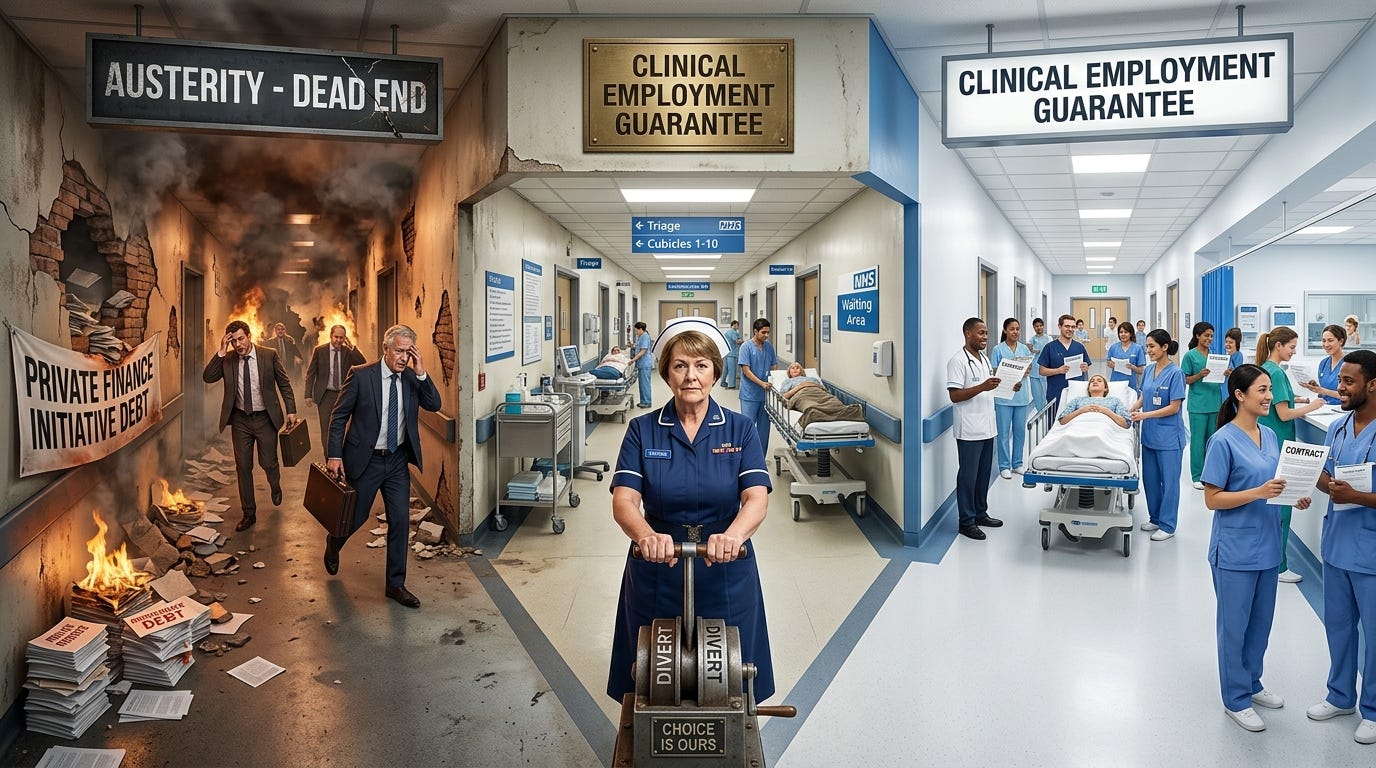
The prevailing narrative surrounding the NHS crisis is one of insurmountable financial constraint. Policymakers, media, and the public are constantly confronted with headlines about deficits, rising costs, and the need for painful choices between competing priorities. This framing presents the problem as one of affordability: “Can we afford to pay our staff more?” “Can we afford to hire more doctors?” “Can we afford to fix the hospitals?” This orthodoxy treats government spending as analogous to a household budget, where expenditure must be strictly limited by available income from taxes and borrowing. However, this perspective is a dangerous fallacy when applied to a sovereign nation that issues its own fiat currency, such as the United Kingdom. A proper understanding of the UK’s monetary and fiscal system, grounded in its official accounting framework, reveals that the NHS faces no genuine resource‑based limit on its ability to fund salaries, equipment, and infrastructure. The true constraint is not money, but real‑world resources and the risk of inflation.
Modern Monetary Theory (MMT) offers a different perspective, arguing that government deficits do not matter as much as orthodox theory claims, if at all (Pandit, 2022). At its core, MMT posits that a monetarily sovereign government cannot involuntarily run out of money because it is the monopoly issuer of that currency. The UK government, through the Bank of England, can create pounds sterling electronically to pay any invoice presented in that currency. Therefore, the notion that the NHS’s departmental deficit contributes to a national deficit is a misconception of how the system works (Berkeley, Tye and Wilson, 2021). When the Treasury pays an NHS trust, it is simply adjusting ledger balances; the payment is not contingent on previous tax receipts or bond sales. Taxes and borrowing are not sources of revenue for government spending; they serve entirely different functions within the economy.
According to the official accounting model of the UK Exchequer detailed in documents such as ‘An Accounting Model of the UK Exchequer’, the government’s budget operates on a different logic than a business or household (Berkeley, Tye and Wilson, 2021). Taxes primarily serve to:
Create Demand for the Currency: The obligation to pay taxes in pounds sterling is what gives the currency its value and ensures people accept it in exchange for goods and services.
Control Inflation: Once the government spends money into the economy, it can withdraw excess liquidity (created by the initial spending and subsequent private sector activity) through taxation. This prevents the economy from overheating and maintains price stability. If aggregate demand exceeds the economy’s productive capacity, prices will rise. Taxation is the primary tool to cool down excessive demand.
Regulate Economic Activity: Specific taxes, such as VAT or excise duties, can be used to influence behaviour, for example, discouraging smoking or incentivising certain industries.
Government bonds, meanwhile, are not a tool for borrowing but rather a savings mechanism for the private sector, allowing individuals and institutions to hold interest‑bearing, liquid assets denominated in pounds sterling. The central bank manages interest rates by adding or removing reserves from the banking system, not by selling bonds to the public.
Reframing the question from “How do we pay for the NHS?” to “What real resources are available to us, and at what point does using them trigger inflation?” shifts the entire debate. The NHS’s budget is not a fixed pot of money; it is a claim on the nation’s real productive capacity—the doctors, nurses, engineers, architects, and materials needed to deliver healthcare. If there are idle workers, unused factory capacity, or unemployed resources, the government can use its spending power to activate them without causing inflation. The constraint is not a lack of financial capacity, but the physical availability of these resources. The current crisis of understaffing and unfilled consultant posts is not a sign of financial impossibility, but a sign of wasted potential. The UK possesses the monetary sovereignty to ensure every willing and able worker can be gainfully employed, including in the vital public service of healthcare.
This understanding dismantles the coercive logic of austerity that has dominated UK fiscal policy for decades. It exposes the argument that the NHS must compete with schools or defence for a scarce pool of “taxpayer money” as a false dilemma. The government, as the employer of last resort in the monetary system, has a responsibility to ensure full employment of the nation’s human capital. Leaving millions involuntarily unemployed while hospitals stand empty of staff is not merely a policy failure; it is a violation of the principle of full utilisation of national resources. The focus must therefore shift from cutting budgets to managing the economy to ensure that the NHS can attract and retain the skilled professionals it needs to meet the population’s health requirements, without triggering the kind of wage‑price spiral that would threaten the cost of living. The economic tools to do so are already at the government’s disposal; what is needed is the political will to wield them correctly.
The Clinical Employment Guarantee
An MMT Blueprint for a World‑Leading NHS
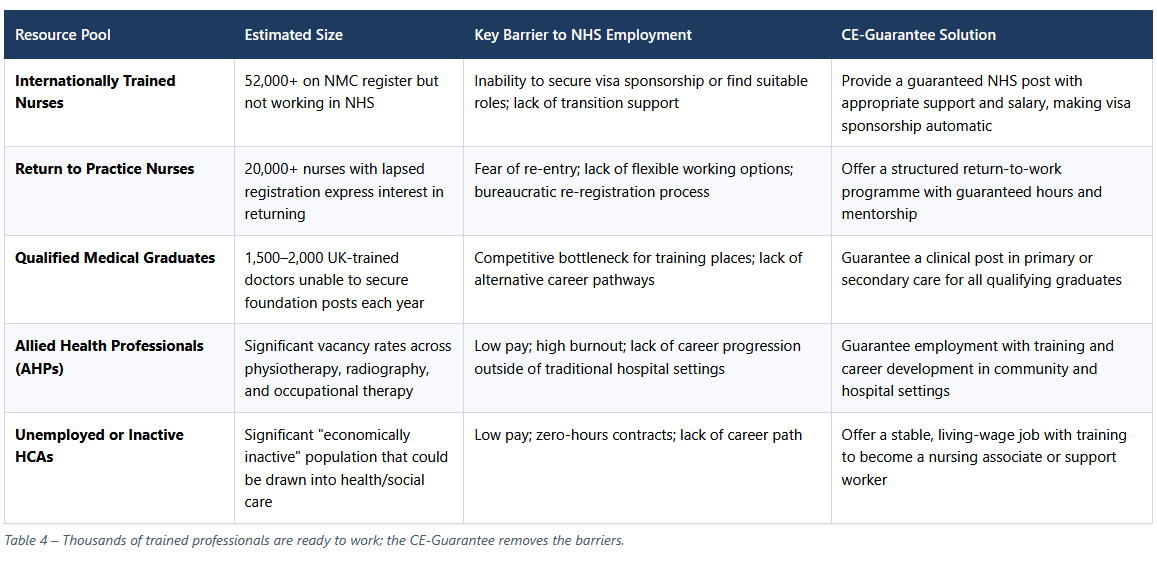
Applying the principles of Modern Monetary Theory to the NHS yields a powerful and practical policy solution: the Clinical Employment Guarantee (CE‑Guarantee). This proposal, inspired by the Job Guarantee (JG) concept central to MMT, would fundamentally transform the relationship between the state and the healthcare workforce, moving the NHS from a position of perpetual scarcity to one of sustainable capacity. The CE‑Guarantee would be a standing offer from the Treasury to NHS England to hire any qualified and willing healthcare professional who is currently outside of paid employment (Michael, 2026). This would include every UK‑trained doctor, nurse, midwife, allied health professional, and other key clinical staff seeking work. It is not a blank cheque for unlimited hiring; rather, it is a carefully designed macroeconomic stabiliser that addresses the root causes of workforce shortages and inflationary pressure simultaneously.
The economic logic behind the JG is twofold. First, it guarantees full employment, fulfilling the state’s responsibility to ensure that everyone who wants to work can find a job. Second, and perhaps more critically, it acts as a nominal anchor for wages, helping to keep inflation under control. In a conventional labour market, when unemployment is low and demand for workers is high, employers are forced to bid up wages, which can lead to a wage‑price spiral and destabilise the economy. The JG solves this by setting a fixed, socially determined wage for a public sector job. This establishes a floor for wages in the entire economy; no worker would accept a lower wage when a decent alternative is guaranteed by the state. This tames wage inflation without suppressing wages altogether, providing a stable foundation for economic activity.
For the NHS, the implementation of a CE‑Guarantee would have immediate and profound benefits. The most pressing of these would be the rapid and substantial expansion of the clinical workforce. The service is currently crippled by shortages of doctors and nurses, a problem exacerbated by international recruitment challenges and a domestic pipeline struggling to produce enough graduates. A CE‑Guarantee would tap into the pool of unemployed or underemployed healthcare professionals in the UK, providing an immediate injection of thousands of trained, experienced, and motivated staff. This would directly address the cause of many of the NHS’s operational failures, from long waiting lists to overstretched emergency departments. It would empower clinicians by giving them the human resources needed to deliver timely and effective care, thereby improving patient outcomes and reducing the burnout that drives professionals away.
Furthermore, the CE‑Guarantee would provide a powerful tool for controlling labour costs. By establishing a baseline wage for healthcare professionals, it would prevent the intense competition between trusts for a finite pool of staff from spiralling into runaway wage inflation. This creates a predictable and manageable environment for NHS budgeting, freeing up financial resources that would otherwise be consumed by escalating salary bills. This stability would allow for better long‑term planning and investment in areas beyond staff costs, such as technology and infrastructure. The policy essentially decouples the NHS’s ability to staff itself from the whims of the private sector labour market, ensuring that patient care needs, not market pressures, determine staffing levels.
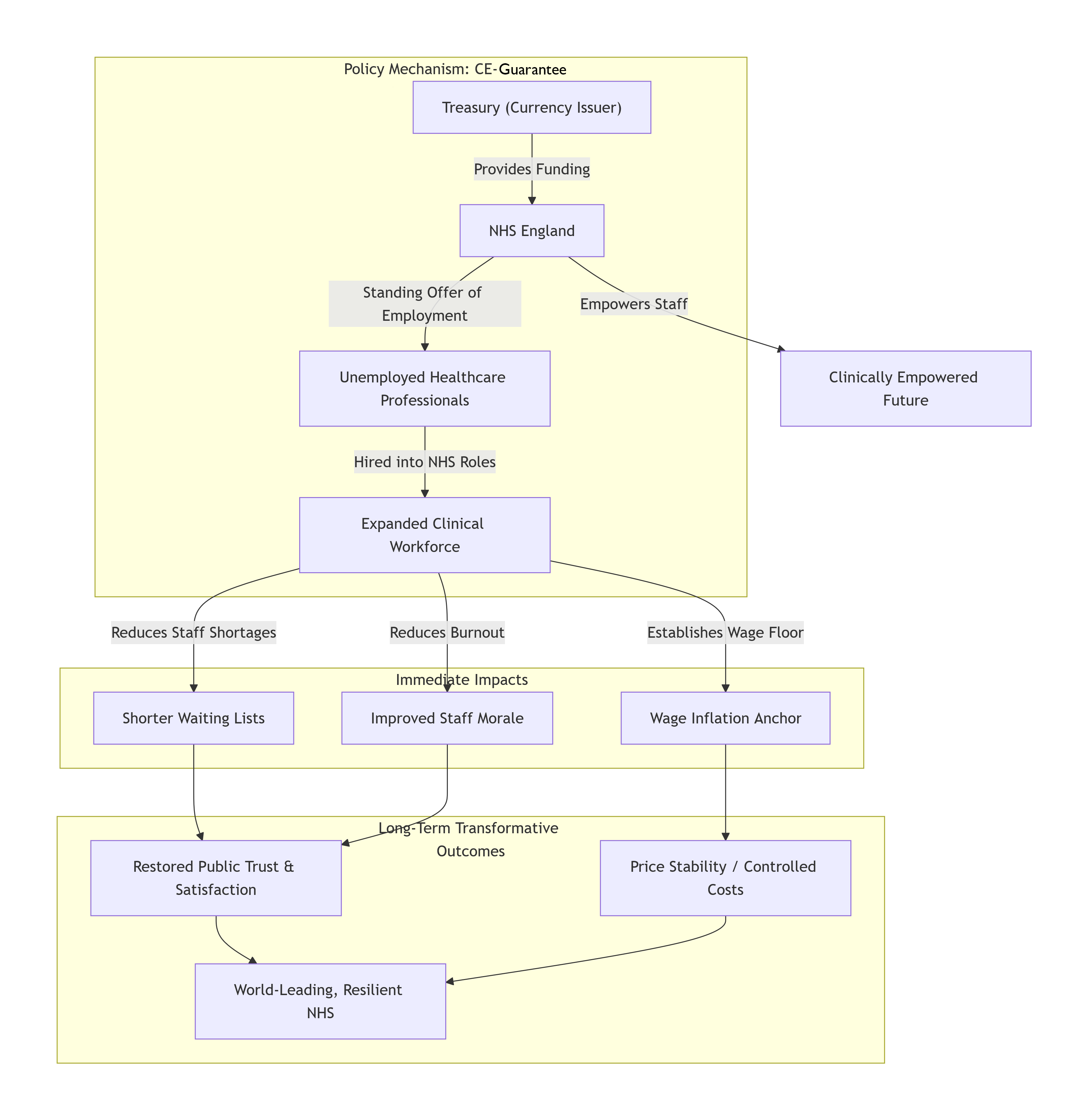
Critically, the CE‑Guarantee would also serve to restore public trust in the NHS. The current state of record‑low public satisfaction is driven by tangible failures that a properly staffed service could resolve (Healthwatch, 2025). Hiring thousands of new doctors and nurses would be a powerful, visible signal of the government’s commitment to rebuilding the service. It would demonstrate that the political will exists to overcome the fiscal constraints imposed by years of austerity and privatisation. This approach reframes the debate from one of “can we afford it?” to “how do we best utilise our national talent?” It aligns perfectly with public opinion, which overwhelmingly believes the government should spend more on the NHS and sees improved access and staffing as the top priorities (Nuffield Trust, 2026). By implementing a CE‑Guarantee, the government would be acting on the public’s wishes in the most direct and impactful way possible. It would be a transformative policy that builds a stronger, more resilient NHS on the foundation of full employment and price stability, returning it to its rightful place as a world‑leading health system.
From Damage Control to Transformation
A Dual‑Pronged Strategy for Recovery
Reversing the decades of decline and privatisation that have weakened the NHS requires a comprehensive strategy with two distinct but complementary phases: immediate damage control to halt the financial bleeding, followed by a long‑term transformation based on sound economic principles. This dual approach acknowledges that while the structural flaws in the NHS’s financing and asset base must be addressed, the ultimate goal is to build a more robust, equitable, and world‑class health service. It moves beyond reactive crisis management to proactive, systemic change, grounded in the reality of the UK’s monetary sovereignty.
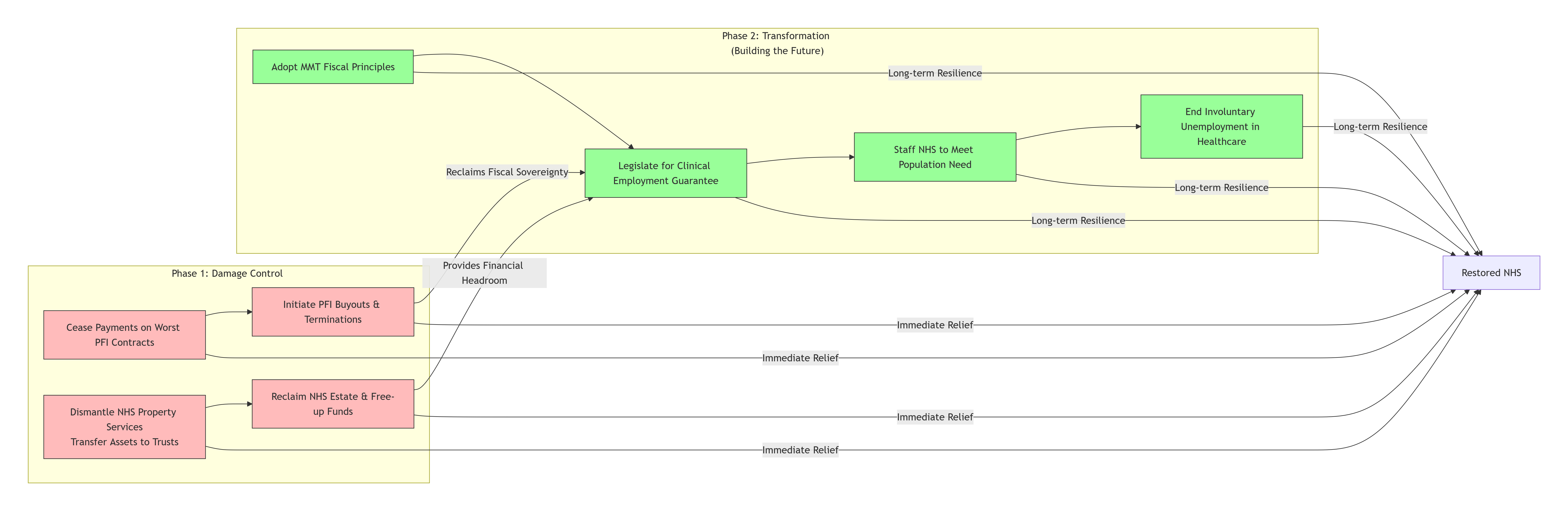
The first phase, damage control, focuses on rectifying the most egregious errors of past policy. The single most urgent task is to confront the toxic legacy of the Private Finance Initiative. Continuing to pay hundreds of millions of pounds in unitary charges to private investors for assets the NHS could build and own for less is a nonsensical drain on resources. The government must immediately cease payments on the worst‑performing PFI contracts and initiate buyouts or terminations wherever possible (Centre for Health and the Public Interest, 2025). While the process of exiting these contracts carries risks, including potential disruption to services, the alternative of continued payment is untenable. The estimated public cost of buyouts and terminations to date is £3.755 billion, but this is a fraction of the total liability and represents a necessary investment in reclaiming NHS assets and freeing up billions for patient care (UK Parliament, 2021). Similarly, the dysfunctional structure of NHS Property Services (NHSPS) must be dismantled. Its accumulated losses and inability to collect rent highlight a profound failure of governance (UK Parliament, 2019). The government must urgently implement policies that facilitate the transfer of properties from NHSPS back to NHS trusts that actually need them, unlocking valuable assets and ending the parasitic relationship between the health service and this loss‑making entity. This damage control phase is not about nostalgia; it is about fiscal prudence and reclaiming control over the NHS’s destiny.

The second phase is the transformation of the NHS’s funding model, moving decisively away from the bankrupt logic of orthodox economics towards a framework informed by Modern Monetary Theory. The cornerstone of this transformation is the implementation of a Clinical Employment Guarantee (CE‑Guarantee) (Michael, 2026). This policy directly tackles the root cause of many operational failures: chronic understaffing. By offering a standing job to every unemployed healthcare professional, the CE‑Guarantee ensures the NHS can staff itself to meet population need without triggering unsustainable wage inflation. This approach reframes the NHS not as a charity that must beg for scraps, but as a vital public utility with a secure and predictable source of funding for its most important resource: its people. This policy would empower NHS staff, restore public trust through tangible improvements in access and quality of care, and finally break the cycle of austerity‑driven underinvestment. It is the logical application of the UK’s unique monetary sovereignty to a public service crisis, demonstrating that the government has the power to end involuntary unemployment in the healthcare sector.
Together, these two phases create a coherent path forward. The damage control measures provide the immediate cash flow relief needed to begin tackling backlogs, repairing infrastructure, and investing in modern equipment. The transformation agenda provides the long‑term strategic direction, ensuring that the NHS is never again starved of the resources it needs. This is not a return to the past, but a leap into a future where the NHS is properly resourced, staff are valued, and patient care is the sole focus. It is a plan to not just save the NHS, but to fulfil its promise and transform it into the world’s leading healthcare provider once again.
Restoring the NHS
A Call to Action for a Clinically Empowered Future
The National Health Service stands at a crossroads. It is battered by a decade of ideological attacks, financially strangled by failed privatisation schemes, and its workforce pushed to the brink of exhaustion. Public trust has reached an all‑time low, and the dream of a universally accessible, high‑quality health service feels increasingly distant (Healthwatch, 2025). Yet, the path forward is clear. It requires a collective refusal to accept this state of affairs and a unified call to action for NHS staff, policymakers, and the public. The goal is not merely to patch the cracks but to rebuild the entire edifice on a foundation of economic reality and unwavering commitment to the service’s founding principles.
For NHS staff—the doctors, nurses, porters, cleaners, and administrators who are the soul of the service—this moment demands courage and solidarity. Your dedication in the face of impossible odds is what keeps the service running. Now is the time to channel that energy into fighting for the resources you need to do your jobs properly. Demand the reversal of crippling PFI contracts that drain your budgets and force impossible choices. Advocate for the closure of dysfunctional bodies like NHS Property Services that act as a millstone around your neck. And champion policies like the Clinical Employment Guarantee, which would empower you with the teams you need to deliver safe, timely, and compassionate care (Michael, 2026). You are not expendable; you are the most valuable asset the NHS possesses.
To policymakers in Westminster and Whitehall, the message is simple: abandon the bankrupt dogma of austerity and the fallacious idea that the government is like a household that must live within its means. The UK government is not revenue‑constrained; it is resource‑constrained (Berkeley, Tye and Wilson, 2021). It has the power to fund the NHS adequately. The choice is yours: continue to preside over a system haemorrhaging money into private pockets through PFI and outsourcing, or take decisive action to reclaim those assets and redirect that wealth to patient care. Implement the damage control measures—initiate buyouts, terminate bad contracts, and dismantle ineffective intermediaries. Then, summon the political will to enact the long‑term transformation: legislate for a Clinical Employment Guarantee. This is not radical socialism; it is pragmatic economic management. It is the only way to ensure the NHS can staff itself sustainably, control costs, and deliver on its promise of care for all.
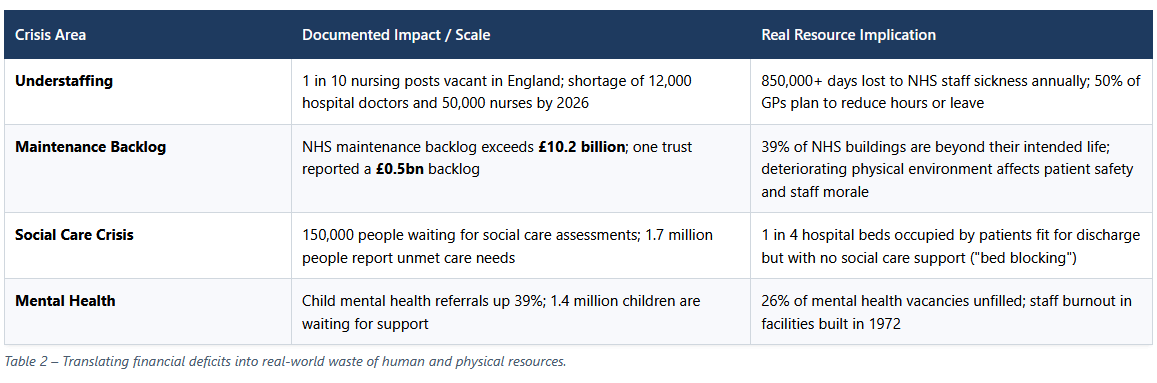
And to the British public, who cherish the NHS as one of the finest achievements of the 20th century, your voice matters. The dramatic fall in public satisfaction is a powerful indictment of the current trajectory (Nuffield Trust, 2026). Make your feelings known. Support campaigns calling for an end to PFI and for increased investment in the health service. Hold your elected representatives accountable. The majority of you believe the government should spend more on the NHS and agree it should be free at the point of delivery. Use that collective power to demand a return to the principles that made the NHS great.
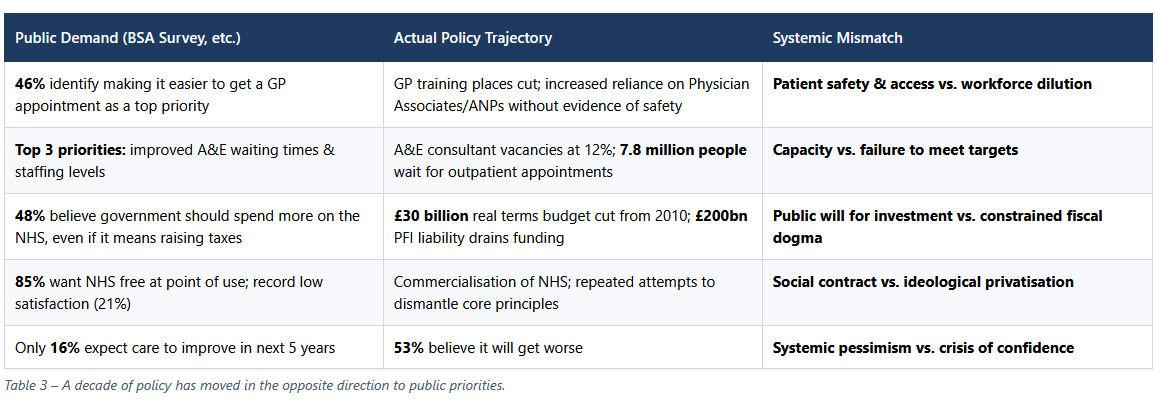
Restoring the NHS to its former status as a world‑leading health system is not a utopian fantasy. It is an achievable goal built on a foundation of clear‑eyed economic analysis and a renewed commitment to public service. By ceasing the financial haemorrhage caused by privatisation and embracing a funding model that recognises our nation’s true monetary capacity, we can build a healthier, fairer, and more resilient future for all. Let this be the moment we choose to save our health service, not just for today, but for generations to come.

Bibliography
BBC News (2026) ‘Satisfaction with NHS lower in younger groups, survey suggests’. Available at: https://www.bbc.co.uk/news/articles/c8x7jd8lnrvo
Berkeley, A., Tye, R. and Wilson, N. (2021) An Accounting Model of the UK Exchequer. 2nd edn. Available at: https://gimms.org.uk/2021/02/21/an-accounting-model-of-the-uk-exchequer/
Centre for Health and the Public Interest (2025) ‘How to deal with the toxic legacy of PFI in the NHS: options for policymakers’, CHPI. Available at: https://www.chpi.org.uk/blog/how-to-deal-with-the-toxic-legacy-of-pfi-in-the-nhs-options-for-policymakers
Healthwatch (2025) ‘Our response to the latest British Social Attitudes Survey results’, Healthwatch UK. Available at: https://www.healthwatch.co.uk/response/2025-04-02/our-response-latest-british-social-attitudes-survey-results
HM Treasury (2018) Treasury Minutes Progress Report. Available at: https://assets.publishing.service.gov.uk/media/6568b717cc1ec500138eefeb/E03022635_CP_987_Treasury_Minutes_Progress_Report_TEXT_V01_PRINT.pdf
King’s Fund (2024) ‘An Unhealthy End Looms For The Private Finance Initiative’, King’s Fund. Available at: https://www.kingsfund.org.uk/insight-and-analysis/blogs/unhealthy-end-looms-private-finance-initiative
King’s Fund (2026) ‘Public Satisfaction With The NHS And Social Care In 2025 | BSA’, King’s Fund. Available at: https://www.kingsfund.org.uk/insight-and-analysis/reports/public-satisfaction-nhs-social-care-2025-bsa
London School of Economics (2018) ‘How to deal with the toxic legacy of PFI in the NHS’, LSE Blogs. Available at: https://blogs.lse.ac.uk/politicsandpolicy/pfi-nhs-options-for-policymakers/
MMT_Michael. (2026) ‘The Cure: Treating Malignant Metastatic Mismanagement’, MMT’s Substack. Available at: https://mmtmichael.substack.com/p/the-cure
National Audit Office (2017) Progress on the government estate strategy. Available at: https://www.nao.org.uk/wp-content/uploads/2017/04/Progress-on-the-government-estate-strategy.pdf
NatCen (2023) ‘NHS and social care: British Social Attitudes 39’, NatCen. Available at: https://natcen.ac.uk/sites/default/files/2023-08/bsa39_nhs-and-social-care.pdf
NatCen (n.d.) ‘Public attitudes to the NHS and social care’, NatCen. Available at: https://www.kingsfund.org.uk/insight-and-analysis/reports/public-satisfaction-nhs-social-care-2025-bsa
NHS Property Services (n.d.) ‘Our properties’, NHS Property Services. Available at: https://www.property.nhs.uk/property-search/
Nuffield Trust (2026) ‘Public satisfaction with the NHS and social care in 2025: Results from the British Social Attitudes survey’, Nuffield Trust. Available at: https://www.nuffieldtrust.org.uk/research/public-satisfaction-with-the-nhs-and-social-care-in-2025-results-from-the-british-social-attitudes-survey
Pandit, J.J. (2022) ‘Modern monetary theory for the post-pandemic NHS: why budget deficits do not matter’, British Journal of Healthcare Management. Available at: https://doi.org/10.12968/bjhc.2021.0087
UK Parliament (2019) ‘NHS property services set up to fail’, Public Accounts Committee. Available at: https://committees.parliament.uk/committee/127/public-accounts-committee/news/98266/nhs-property-services-set-up-to-fail/
UK Parliament (2021) ‘PFI0001 - Evidence on Private Finance Initiatives’, Parliament Committees. Available at: https://committees.parliament.uk/writtenevidence/88546/html/
UK Parliament (2026) ‘NHS Capital Spending - Hansard’, Hansard. Available at: https://hansard.parliament.uk/Commons/2026-03-04/debates/967E5D1B-2FF1-4F33-BC0D-1D32B610E874/web